Dogs And The Love They Share

Today, I had a flashback of an event that I was witness to as a kid growing up in my family’s home in Woodside, Queens. My aunt Sissy, one afternoon, found her brother and my uncle John sawing the legs of his bed in his apartment. “John, what are you doing??”…..My uncle, a very well mannered and quiet guy, looked at his sister and told my aunt to, politely, mind her business and he continued the job of sawing the legs of his bed. Now, this became a big deal…What was John doing? Why was he doing this? When my mom found out what he was doing, she calmly told me, my aunt and everyone else who thought that John had lost his mind that he was doing this for Trixie. Ah hah…it all made sense. You see, Trixie was John’s dog. A dog that joined our family in 1965 and who never left John’s side. Trixie, you see, was having a hard time, as she was getting older, making the leap into John’s bed so he did what what he thought best for his dog; he lowered the bed. That was the first time that I was witness to the love that exists between humans and dogs. Nobody can fully understand the meaning of love unless he’s owned a dog. A dog can show you more honest affection with a flick of their tail than a man can gather through a lifetime of handshakes.

Dogs come into our lives to teach us about love, they depart to teach us about loss. A new dog never replaces an old dog, it merely expands the heart. I’ve been lucky in my life because I have loved many dogs, almost as much as John loved Trixie.

If you have loved many dogs your heart is very big. Thanks, John…..

Pizza and Memories

Pizza. What is it about pizza? An invention created for the masses: breads baked with emmer wheat; polenta made from ground barley; cheese, fresh and aged, made from the milk of cows and sheep; pork sausages and cured meats; vegetables grown in the fertile soil along the Tiber. In these staples, more than the spice-rubbed game and wine-soaked feasts of Apicius and his ilk, we see the earliest signs of Italian cuisine taking shape.
The pillars of Italian cuisine, like the pillars of the Pantheon, are indeed old and sturdy. The arrival of pasta to Italy is a subject of deep, rancorous debate, but despite the legend that Marco Polo returned from his trip to Asia with ramen noodles in his satchel, historians believe that pasta has been eaten on the Italian peninsula since at least the Etruscan time. Pizza as we know it didn’t hit the streets of Naples until the seventeenth century, with Old World tomato and, eventually, cheese, but the foundations were forged in the fires of Pompeii, where archaeologists have discovered 2,000-year-old ovens of the same size and shape as the modern wood-burning oven. Sheep’s- and cow’s-milk cheeses sold in the daily markets of ancient Rome were crude precursors of pecorino and Parmesan, cheeses that literally and figuratively hold vast swaths of Italian cuisine together.
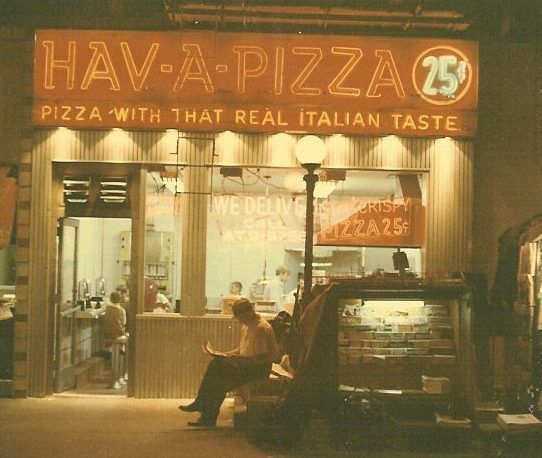
To me, on a more personal level, Pizza became a reward. You see, on 89th and Lexington Ave. directly across the street from Dr. Rosenblatt’s office, where my sister and I were dragged to as children, was a pizza place. Our mother always brought us there after our Doctor’s visits. After being terrified by Dr. Rosenblatt’s walrus moustache and being injected, poked and prodded, those slices of pizza represented freedom. I can still taste them. It didn’t matter if we ate them close to dinner time, or if we had to jingle change to make sure that we could get a few slices, they were the best. Even today, I make it part of my routine after visiting the Doctor to always grab a slice. It reminds me of one more visit down……Thanks, Mom……

Abortion- A ‘Core Value’?

The top executives of more than 180 companies have signed a letter that says abortion is essential in order for people to be successful in their businesses.
“When everyone is empowered to succeed, our companies, our communities and our economy are better for it,” the executives say in the letter posted on a newly launched website titled “Don’t Ban Equality.”
“Restricting access to comprehensive reproductive care, including abortion, threatens the health, independence and economic stability of our employees and customers,” they said, adding:
Simply put, it goes against our values and is bad for business. It impairs our ability to build diverse and inclusive workforce pipelines, recruit top talent across the states, and protect the well-being of all the people who keep our businesses thriving day in and out”.
Let me get this straight…..infanticide is now described as ‘comprehensive reproductive care’. George Orwell said, ‘Political language is designed to make lies sound truthful and murder respectable, and to give an appearance of solidity to pure wind.’
Bad for business? Wow. Orwell would be smirking at this one.
Yes, I’m a Catholic. Yes, I believe in the sanctity of life. It’s also personal. My mother, as good a women as I’ll ever know, miscarried a number of times. She had a number of Rh Negative pregnancies which resulted in a number of lost babies. One of my earliest memories was accompanying my mother to a Doctor’s appointment and watching as her Doctor pleaded with her to allow him, as he described it, to tie her tubes’. My Mother refused. I remember , later, asking my Mom what that meant. She just said that ‘life is a gift’. To my 5 year old mind, I didn’t know what she meant. I do now.
I can only imagine what my Mother would be thinking over abortion now being described as ‘comprehensive reproductive care’.
I can only imagine having a conversation with my mother over the fact that now, in 21st century America, we’re seeing a clash of cultures that one side believes in preserving the God-given right to life for the unborn, and the other regards this as an assault on the rights of women.
When the ‘Social Engineers’ and radicals seeks to impose an agenda, they will commonly attempt to desensitize the general public as to the full extent of their conspiracy. One tactic is to commandeer a common word and by repetitious use that words definition is eventually supplanted with the new one. The objective is to superimpose a new meaning over the targeted word in public perception and thereby transfer that good feeling associated with that word. It’s known as Associative Conditioning and its sad that so many folks are falling for this.

There won’t be a lot of ‘likes’ to this post and to those who find offense in what I wrote let me just say that we disagree on what is right and wrong, moral and immoral.

Shameful….

https://www.breitbart.com/politics/2019/06/10/top-execs-of-180-companies-abortion-necessary-to-be-successful-in-business/?fbclid=IwAR2ZpeZQ2Sm2pOC3UZ3y9EAKXF35dK5EgmcIu0ZTCt_bS41FSf7IyQGtSnQ

Talent is a gift….Character, a choice

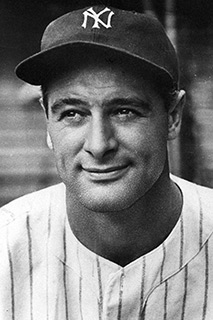
On this date, 78 years ago—in 1941—at 10:10 p.m. in a house located at 5204 Delafield Avenue in the Riverdale section of the Bronx, N.Y., a 37-year-old man died. This man died from a disease that robbed him of the ability to move, to run, to walk. He had suffered from it for about two years or so; it stole from him what mattered most to him: his livelihood and his avocation. The disease that ravaged him stole his gifts in the way an agile ballplayer stole bases, quickly and swiftly. Eventually, ironically and cruelly, the disease that claimed him in the end was named after him.
He died as he lived, quietly and with dignity. And when he died, not only did a whole neighborhood grieve, but a sports-mad city did as well. Indeed, one didn’t have to like baseball to suddenly stop and give pause to reflect not only on the man who was considered a great ballplayer but on the greatness of the man himself. That man was Lou Gehrig, who wore the legendary number 4 of the legendary New York Yankees. Seventy-five years is a long time; people—especially sports figures—come and go. Why bother to remember such long-ago events or people long faded from historical or popular memory? Why not? We ought to, because Lou Gehrig is worthy of remembering in a jaded age when fame and fortune seem to mean more than personal integrity, honesty and rectitude, values and traits that are nowadays just words in a dusty dictionary on an unused reference shelf.
Lou Gehrig was no showman or outsized personality in the way Babe Ruth was (as much as the fans liked him). No: He was unusual for his time, his place and his profession in that he took pride (of the non-vainglorious type) in what he was and what he did. (Even Hollywood recognized how special he was: Gehrig would be commemorated in the sentimentally popular movie with Gary Cooper in the starring role: 1942’s “The Pride of the Yankees.”)
He gave everything and everyone his respect and their due. The personal and professional lessons of his life went beyond baseball: He showed how to be an authentic human being, and that is why he is so important today. Lou Gehrig’s life story ought to be a primer for anyone in any profession, whether it be in athletics or even politics. Integrity and authenticity can never be faked and can never be bought: It can only be lived.

Elsie

Elise

Today, my cousin, Kevin, our family historian, sent out a reminder that our Aunt Elise would have celebrated her 119th birthday today. I know, you’re probably thinking nobody lives long enough to celebrate their 119th birthday…. but, if anyone could have done it, it would have been Elsie.
Elsie. Where do I begin? I can tell you about her cooking skills…they were fabulous. I can also tell you that, to this day, I can’t see rice pudding on a menu without smiling. It was Elsie who introduced me to that. Elise, for many years worked as a ‘domestic’ for various families who lived on Park Ave.

As a domestic, if you went to work for a middle-class family or an upper-class family, you would usually have to go to live in the house where you were working. If you were working for an upper working-class family, it was more likely that you would live at home and simply migrate over every day to do the work. Wherever you were a servant, the hours of labor were very long. If you lived in, you tended to be remote from your own family and friends. Often you would be living in an alien class environment, and employers didn’t want close contacts between the servants and the family. They certainly didn’t want the servant’s family trooping in. And they didn’t really want the servants going off to spend time with their family.
The times when you would have to work hardest were often the holidays when everyone else was having the day off, because usually then, Christmas, for example, the family for which you worked would be having a big party or dinner and you would have to work to get it all ready. This was her life.
There were also times that the families Elsie worked for would not be home for the holidays and that’s when Elise took the time to ‘use’ her employers’ home to entertain by preparing full course meals and serve HER family. Now this usually meant bribing the doorman of the building so he wouldn’t squeal, and I can still remember a family story that, once, during a full course dinner for 10 or 12 members of our family, the doorbell rang. My mother told me that everyone scattered like roaches do when the lights are turned on. I can also recall a story that my Uncle Ray used to tell that, during the long hot NY City summers, it was not unusual for Elsie to call her stepsister, Catherine, my grandmother and Ray’s mother, and tell her to send Ray and his brother Jimmy over to the Park Ave residence of her employer, ‘with towels’, so they could bath in the bathrooms.
Elise. She joined our family when her father married my grandmother’s mother after her husband passed on. A turn of the century blended family. Elsie…..cantankerous, sharp, biting; the stories of her and my grandfather sometimes not seeing eye to eye on issues are legendary. But, beneath the hair that eventually became wispy, there was kindness. She was happy to belong and happy to do for others.
There’s a lot more that I can write about regarding Elsie. I’ll save these stories for another time. I guess I just wanted to thank Kevin for reminding us that today’s her birthday. Happy Birthday, Elsie…..I’ll get some Rice Pudding tonight (even though it’s not gonna be as good as yours) on the way home…..

Illegal Immigration…an insult to every American citizen, naturalized or native born

While many if not most illegal aliens are decent people and are only illegally in the United States to provide for themselves or their families—an action that does not justify breaking the immigration laws of the United States—all of them are not decent and many are responsible for shocking crimes and incredible damage to families all across America.
Most everybody remembers the tragedy in New Jersey where illegal aliens wantonly killed three students and seriously injured another. A few people even remember that Jamiel Shaw was gunned down by an illegal alien gang member. However, very few people remember or even know that four year old Esmeralda Nava was kidnapped, molested, and strangled to death by an illegal alien child predator. The perpetrator that killed little Esmeralda told police that he carried the girl with one arm and muffled Esmeralda’s cries for her daddy with his other hand “until she stopped moving.’’
Almost nobody knows that the illegal alien sexual pervert that used and abused little Esmeralda Nava had been previously deported. Who remembers Min Soon Chang, an eighteen year old freshman at the University of North Carolina who was killed by a drunk driving illegal alien? In that case the perpetrator had at least three prior DWI convictions and had been previously deported 17 times. That is not a typo.
Who besides her family even know, let alone remember, that Danielle Gorectke, a vivacious 23 year old student at University of Wisconsin- Stevens Point was raped and beaten to death by an illegal alien?
Each one of these tragedies devastated an American family, and I could go on and on with more equally horrific stories. Each one of these tragedies was totally preventable if the perpetrator was not illegally residing in the United States.
Excluding breaking the immigration laws of the United States and committing ID theft and fraud, do illegal aliens commit more crime than legal immigrants? Probably, but nobody really knows. Do illegal aliens commit more crime than citizens? Most likely, but nobody really knows. What we do know is that the Justice Department does not report crimes committed by foreign nationals, illegal aliens, or even Hispanics (about 80% of illegal aliens are Hispanic). Interestingly, the DOJ does however, report crimes committed against Hispanics, including illegal alien Hispanics, but will not distinguish if the perpetrator was Hispanic themselves. (Crimes committed by Hispanics, including illegal alien Hispanics, go into the “Caucasian” category as “Hispanic” is an ethnicity, not a race.)
While no crime is ever justified and racially motivated crimes are particularly onerous in a civilized society, the reporting is a one way street the Left’s incorrect perception that “illegal aliens are just good family-values people that are here to do the work Americans won’t.”
When the government does not report crimes committed by illegal aliens, who are mostly Hispanic, but does report “hate crimes” committed against Hispanics it further distorts perceptions.
It is unfortunate that the Left often resorts to an intimidation tactic by labeling my positions as having the ‘uncomfortable stink’ of racism. Why does the Left use this label when a review of any of my previous columns would show nothing but a desire to make certain that our borders are secured and the immigration system has real integrity? Yet, those of us who take this position and make these demands are labeled as racists and xenophobes.
I recognize that our strength as a nation is built on the immigrant experience in America. I welcome legal immigration to this country. However, we are also a nation of laws and government should not adopt policies that encourage illegal immigration. Moreover, our neighbors should not carelessly use the word ‘racism’ when all one is doing is standing for the rule of law.
Illegal immigration is an insult to every American citizen, naturalized or native born.

Be Grateful……

I’ve learned that no matter what happens, or how bad it seems today, life does go on, and it will be better tomorrow. I’ve learned that you can tell a lot about a person by the way he/she handles these three things: a rainy day, lost luggage, and misplaced wallets. I’ve learned that regardless of your relationship with your parents, you’ll miss them when they’re gone from your life. I’ve learned that making a “living” is not the same thing as making a “life.” I’ve learned that life sometimes gives you a second chance. I’ve learned that you shouldn’t go through life with a catcher’s mitt on both hands; you need to be able to throw something back. I’ve learned that whenever I decide something with an open heart, I usually make the right decision. I’ve learned that even when I have pains, I don’t have to be one. I’ve learned that every day you should reach out and touch someone. People love a warm hug, or just a friendly pat on the back. I’ve learned that I still have a lot to learn. I’ve learned that people will forget what you said, people will forget what you did, but people will never forget how you made them feel.

Drive Thru Secrets…….

Today, while picking up my morning coffee, with a coffee roll, of course, at Dunkin’ Donuts, the very friendly Dunkin’ employee who was at the window passed me my order and said, ‘Here you go, Ed’. I looked at her, puzzled that she knew me and I, politely, asked if we knew each other. ‘Sure’ she said. ‘I know you from my other job at the McDonald’s drive through’…….

God, I hope that she doesn’t call my Doctors!!!!

The Left’s Continued Deconstruction

You can abolish democracy by banning the vote or you can do it by letting people vote as many times as they want, by letting small children and foreigners vote, until no one sees the point in counting the votes or taking the process seriously. The same goes for marriage or any other institution. You can destroy it by outlawing it or by eliminating its meaningfulness until it becomes so open that it is absurd.
The left’s deconstruction of social institutions is not a quest for equality, but for destruction. As long as the institutions that preceded it exist, it will go on deconstructing them until there is nothing left but a blank canvas, an unthinking anarchy, on which it can impose its perfect and ideal conception of how everyone should live.
Equality is merely a pretext for deconstruction. Change the parameters of a thing and it ceases to function. Redefine it and expand it and it no longer means anything at all. A rose by any other name might smell as sweet, but if you change ‘rose’ to mean anything that sticks out of the ground, then the entire notion of what is being discussed has gone and cannot be reclaimed without also reclaiming language.
The left’s social deconstruction program is a war of ideas and concepts. Claims of equality are used to expand institutions and ways of living until they are so broad as to encompass everything and nothing. And once a thing encompasses everything, once a rose represents everything rising out of the ground, then it also represents nothing at all.
Deconstruction is a war against definitions, borders and parameters. It is a war against defining things by criminalizing the limitation of definitions. With inclusivity as the mandate, exclusivity, in marriage, or any other realm, quickly meets with social disapproval and then becomes a hate crime. If the social good is achieved only through maximum inclusivity and infinite tolerance, then any form of exclusivity, from property to person to ideas, is a selfish act that refuses the collective impulse to make all things into a common property with no lasting meaning or value.
As Orwell understood in 1984, tyranny is essentially about definitions. It is hard to fight for freedom if you lack the word. It is hard to maintain a marriage if the idea no longer exists. Orwell’s Oceania made basic human ideas into contradictory things. The left’s deconstruction of social values does the same thing to such essential institutions as marriage; which becomes an important impermanent thing of no fixed nature or value.
The left’s greatest trick is making things mean the opposite of what they do. Stealing is sharing. Crime is justice. Property is theft. Each deconstruction is accompanied by an inversion so that a thing, once examined, comes to seem the opposite of what it is, and once that is done, it no longer has the old innate value, but a new enlightened one.
To deconstruct man, you deconstruct his beliefs and then his way of living. You deconstruct freedom until it means slavery. You deconstruct peace until it means war. You deconstruct property until it means theft. And you deconstruct marriage until it means a physical relationship between any group of people for any duration. And that is the opposite of what marriage is.
The deconstruction of marriage is part of the deconstruction of gender and family and those are part of the long program of deconstructing man. Once each basic value has been rendered null and void, inverted and revealed to be random and meaningless, then man is likewise revealed to be a random and meaningless creature whose existence requires shaping by those who know better.
The final deconstruction eliminates nation, religion, family and even gender to reduce the soul of man to a blank slate waiting to be written on.
That is what is at stake here. This is not a struggle about the right of equality, but the right of definition. It is not about whether men can get married, but whether marriage will mean anything at all. It is about preserving the shapes and structures of basic social concepts that define our identities in order to preserve those very concepts, rather than accepting their deconstruction into nullification. The question on the table is whether the institutions that give us meaning will be allowed to retain that meaning. And that question is a matter of survival. Societies cannot survive without definitions. Peoples do not go on existing through the act of occupying space. The deconstruction of identity is also the destruction of people.
And that is what we are truly fighting against.

Do Fathers Count Anymore?

Fatherhood is shrinking in significance. I’m not just talking about physical absence — a third of American kids now live without their biological fathers — I’m talking about perceived importance. More and more, fathers are being viewed as less than necessary.

A 2016 study concluded that children of lesbian parents fared just as well — if not better — than those from a traditional man-woman marriage. A 2013 book stated “the notion that fathering is essential to children’s … development seems to be a uniquely American preoccupation.”

And take this recent exchange on “The View,” an ABC show with a massive female audience from 2013. A guest host, an actor named Terry Crews, had floated the idea that “there are some things only a father can give you.” He was deluged by objection — both on social media and on the set.

When he said, “A father gives you your name,” cohost Whoopi Goldberg joked, “Like in ‘The Lion King?’ ” When he said “a father gives you your security” and “your confidence,” Jenny McCarthy, who is raising a son on her own, shot back, “I’m a single mother and I guarantee you, I can give (my son) all those things.”

The debate went on for several minutes at a high volume, with the female hosts paying homage to widows, single moms and gay couples, and McCarthy hammering at the idea that her “amazing” son needs no man.

And while I know the show is not scientific, it’s entertainment, it still got me thinking how far we have come, that on network TV, a man suggesting “there are some things only a father can give you” is greeted not with agreeing nods but with cannon fire.

On some levels, we men must blame ourselves. The number of fathers who take no responsibility for parenting — who impregnate and run as if they are pollinating flowers — is despicably high. Same goes for disinterested divorced men and deadbeat dads. They have forced single mothers into playing all roles.

But what about the fathers who stay? The fathers who relish their roles? Is citing their virtues now politically incorrect?

Take the sentence “there are some things only a mother can provide.” Does anyone disagree with that? You say “nurturing,” everyone nods. You say “unconditional love,” everyone nods.

But try saying that sentence about a father — as Crews did — and it’s as if you’re hammering people’s toes. “A father provides security,” you suggest? Oh come on, comes the response, as if a woman can’t? “A father provides discipline”? Don’t single moms keep kids in line? “A father provides a male role model.” So now you’re insulting gay couples?

Whew. When did it become so difficult to extol fatherhood? Perhaps when there became other agendas. An author of that 2010 study on lesbian parenting, for example, also has argued there is no need for marriage whatsoever. She also chided President Barack Obama, saying his emphasis on fathers’ importance was “dead wrong.” Even the New York Times, for Father’s Day in 2013, stirred debate — and presumably readers — by asking, “Do fathers bring anything unique to the table?”

But if they don’t, why does nearly every statistic on kids turn sour when fathers disappear? Youth suicides, five times higher than average. High school dropouts, nine times higher. Behavioral disorders, 20 times higher. Runaways and homeless children, 32 times higher.

Does none of that count?

We all recognize it’s a changing world. And I would not use this space to disparage single parents, or two men or two women raising children. But if it’s now insensitive to even question gay parenting, why does it ruffle no feathers to dismiss heterosexual dads? No one should be made to feel a traditional role is prehistoric thinking. That’s bullying of its own kind.

Fatherhood didn’t suddenly, after thousands of years, lose its value. It may be trendy to dismiss dads as little more than fertilizer, but it’s not true. In fact, it’s pretty foolish. Such is our world, where a comment like Crews’ brings a tsunami.
DON’T THROW THAT STUFF OUT

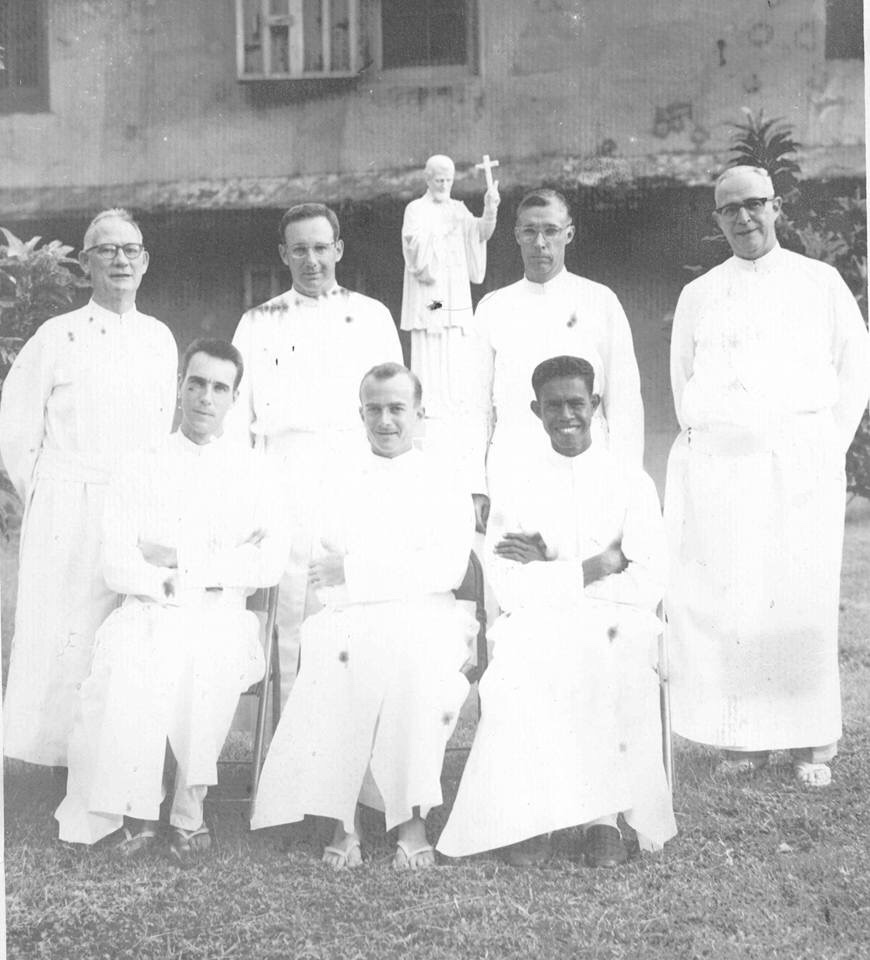
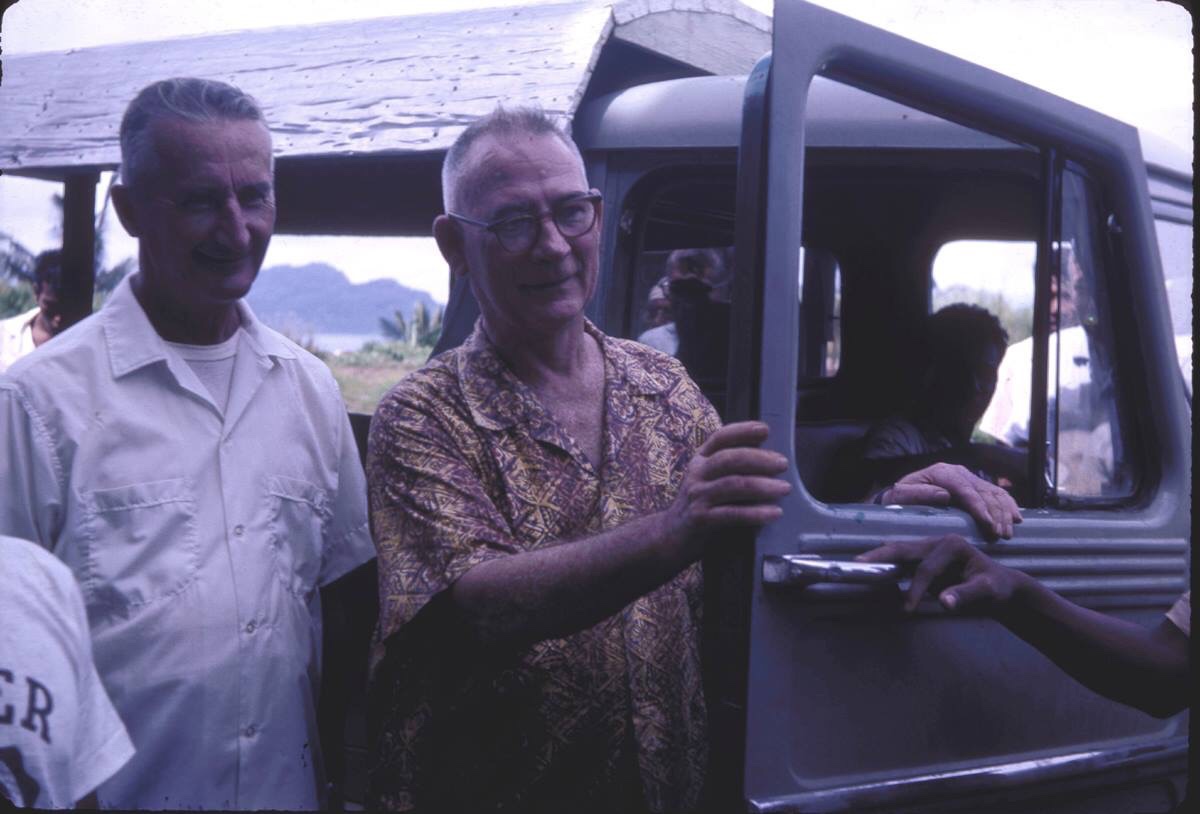
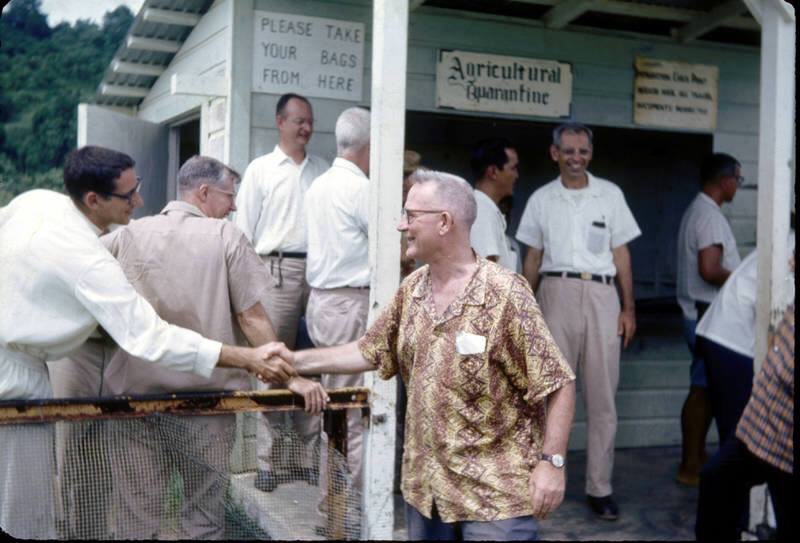
Last night, I found myself trying to organize all those things that one keeps labeled under the heading of ‘family stuff’. There’s something intriguing about poring over old photographs. Whether the photos are black and whites from the Old Country or yellow-stained images from the days of our own youth, looking at them is like peeking through a window at another world. There was other things as well. Since my uncle’s passing in 1976, I kept his ‘stuff’. Now, this includes not only photographs, but mementos from his life. His 8th grade class autograph book, where salutations from fellow classmates read along the lines of ‘2 good 2 be 4 gotten’ and other similar notations that harken back to how kids spoke to each other in the 1920’s. Then I revisited every report card that he received while attending Xavier High School in the 1930’s and painstakingly saved. Now, since I attended the same high school as my uncle, there was a deep bond between him and me. There were letters that several Jesuits sent to my uncle as a young man that he kept. In particular, there were letters from one Jesuit named Gerry Cuddy. While my uncle was alive, he spoke of this Jesuit as being one of the best teachers he had. The report cards bear this out. He received ‘second honors’ during the year that Mr. Cuddy, then a Jesuit Scholastic, was his home room teacher. The report cards then take an ominous turn when, in the following year, he found himself in academic trouble. ‘You son is in danger of failing the following subjects; Latin Composition, Latin Lit, Mathematics. He will need to take remedial examinations in the above checked subjects in order to continue at Xavier’, another saved letter stated. The Jesuits charged 5.00 for each examination and my uncle kept the receipt for these tests, as well. Like a detective, I tried to understand what happened. As I reviewed each card, I saw him standing in from of his parents asking them to sign these report cards and they did. My grandparent’s signatures are on each card under the red circled grades. The shame must have been overwhelming. John was asked to leave Xavier going into his senior year; yet he kept those cards and letters from Gerry Cuddy. Last night, I decided to find out more about who this Jesuit was and, because of the internet, I found myself corresponding with a present day Jesuit, Francis X. Hezel, who worked with Father Cuddy in Micronesia. Father Hezel, thanked me for reaching out and promised to share some insight into who Gerry Cuddy was with me. He sent me the attached photos of Father Cuddy. What kind of man was he that made my uncle save every small piece of correspondence sent from him? When I think of the Jesuits I had, I can recite a number of them who had profound impact on my life. Duminuco, Aracich, Keenan, Biaggi, Hoefner, Wood are Jesuits who helped me in my own life. Fourteen, fifteen, sixteen, seventeen, lemme tell you. Those are big years. Everybody always thinks of it as a time of adolescence—just getting through to the real part of your life—but it’s more than that. Sometimes your whole life happens in those years, and the rest of your life is just the same story playing out with different characters. I’m eternally grateful for going through those years with these Jesuits and I’m grateful that my uncle had, even for a brief time, Gerry Cuddy. A teacher, wrote Henry Adams, attains a kind of immortality because one never knows where a teacher’s influence ends. I hope that Father Hezel shares with me some stories of who Gerry Cuddy was. His influence on my uncle’s life was unquestionable and I thank him for that.

So, as I closed the box on the items I have kept, I will miss my uncle no more or no less than I did yesterday. In a strange way, I found myself missing Gerry Cuddy although I never knew him. There’s no magic wand that has filled the void of my uncle’s absence. Nor would I want there to be. There is no expiration date on grief. Grief, after all, is just a measure of the vastness of love. Grief never really ends because love never ends. I’ll never get rid of those report cards or Gerry Cuddy’s letters.

God could not be everywhere, and therefore he made mothers. …

With this upcoming Sunday being Mother’s Day, I’ve received a lot of requests to rerun something that I wrote about for the anniversary of my Mom’s 84th birthday.

How can I tell you about my mother? This might sound silly. But in the 1941 movie “Dumbo,” there’s a scene where the captured mother elephant, through the bars of a cage, cradles little Dumbo in her trunk and sings:

Baby mine, don’t you cry

Baby mine, dry your eyes

Rest your head, close to my heart

Never to part

Baby of mine

I choke up whenever I see that, because I know that feeling. Forever loved, forever comforted, through whatever bars may separate you, never to part. If this is the last column I write about my mother, then you should know. That was what it felt like to be her son. And it was glorious.

She was born during the Depression and was raised in Manhattan in a ‘railroad’ apartment. She arrived the last of 6 six kids, fully 17 years between she and her oldest sister. Her father drove a bus, her mother stayed at home; sometimes keeping her out of school for company. She used to like telling the story of staying at home and sitting on the ‘stoop’ waiting for her brother to return from WW2 when her family was notified he was on the way home from his duty station in Iceland. They knew he was coming home, but didn’t know when he’d arrive. No worries, she was allowed to stay home from school because her mother felt that there was some things more important than school. She also was fond of telling the story that, while on an earlier Army leave, her brother John was late in seeing her school Christmas show. When he showed up at the school, the nuns of St. Ignatius school stopped the performance and had the kids restart it. Her 4th grade heart, she told her kids, swelled with pride because her brother was there. She and her school friends would hang out on the fire escapes. Her mom left this world when she was 11 and she was left with her dad and brother in that railroad apartment. That same year, in sixth grade, she met a boy who would one day become her husband. Later on when he was in the Army, he became part of the Old Guard. He walked the Tomb of the Unknowns at Arlington. She would often travel, chaperoned by her aunt and brother to Arlington, to just watch her boyfriend guard the tomb.

She was married at 21 and her own motherhood began at 23 with the birth of her son; followed 2 years later by the birth of her daughter.

Like many women of her generation, she concentrated on what she had: a family. She was a strong matriarch, vocal in her love. She kissed. She lectured. She enjoyed being part of a large family. She inspired with her tenacity. Once, when her son was being treated unkindly by a nun that questioned his ability, she took the long ride to the convent to point out to the good sister how wrong she was.

She made her kids breakfast, dinner and Halloween costumes. She was the one they woke at 3 a.m. after a bad dream. She was the one who got up early to put the kitchen oven on in her own railroad apartment so that her kids could dress in front of the open stove in winter. She made sure that her son knew that there was a neighbor of hers named Flip Finnigan who never made it home from Europe during WW2 and she kept a picture of him with her as a young kid sitting on his lap during one of his leaves. At one time she wanted to be a nurse, but she put those deferred dreams into her children and her family.

She became sick early on in her life. Multiple Sclerosis. She saw her ability to move become increasingly difficult, yet she didn’t really complain. She still had her family around her. It must have been hard. She saw her children grow, graduate college, marry and have children of their own. Sadly, she didn’t get to really enjoy or know her grandchildren or live long enough to see her two great granddaughters and of all the trials and tribulations she experienced in her short life, I know that this is the one that she would most regret as her grandchildren have grown into fine adults.

I guess she was like millions of great mothers and, of course, she was to us. In blogging as much as I do, I’ve written about a lot of things but for some reason, I have never really written about her. Sometimes I can almost hear her ask “When do you tell my story?” Today. Happy Mother’s Day, Mom.

And thanks to all the Moms out there for doing what they do.