Senator Rob Rolison’s statement on the proposed ICE detention facility in the Town of Newburgh is a perfect example of the political double-speak that has come to define the immigration debate.
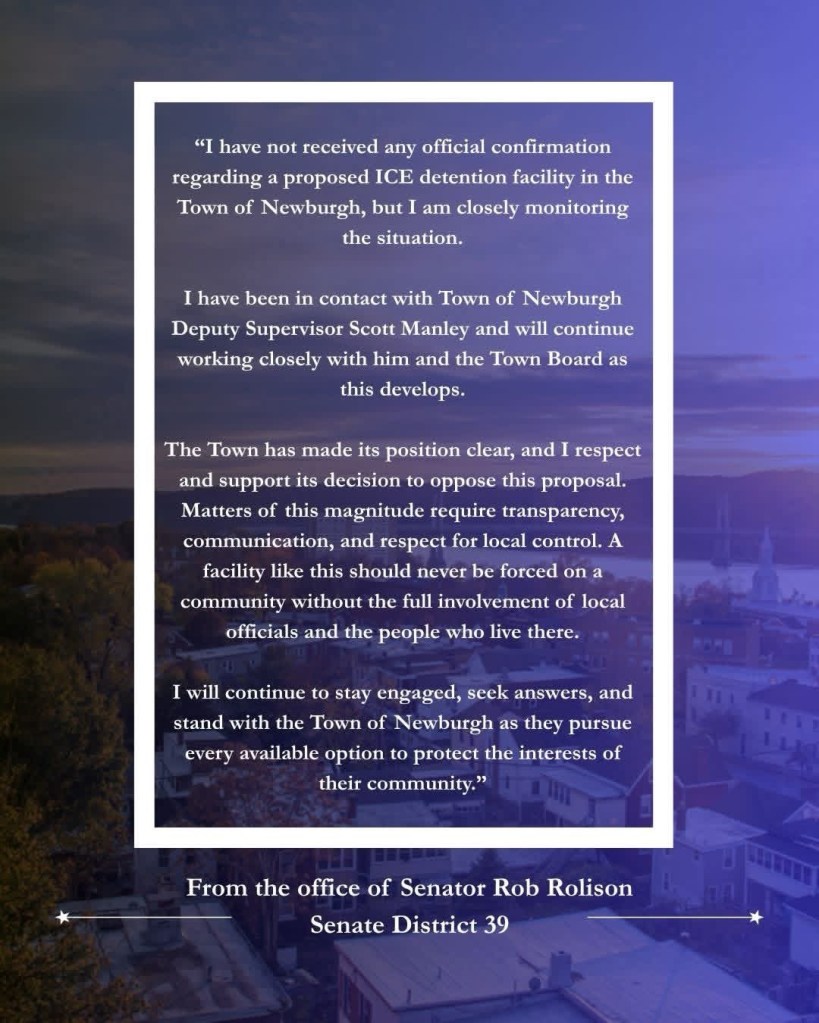
He begins by saying he has received “no official confirmation” regarding the project. Yet, just a few sentences later, he declares that he supports the Town’s decision to oppose it.
Which is it?
If there is no confirmed proposal, why are you already opposing it? If you’re still “seeking answers,” why have you already reached a conclusion?
The federal government is publicly seeking a detention facility in this region. That isn’t rumor or speculation. It’s part of the federal procurement process. Before anyone declares victory or defeat, shouldn’t we know exactly what is being proposed?
Instead, Senator Rolison has chosen the safest political position: oppose first, ask questions later.
Let’s also be honest about what an ICE detention facility is. It is not a prison for local residents. It is a secure facility used to detain individuals who are in the country illegally while they await immigration proceedings or removal under federal law.
For years, politicians at every level have promised stronger borders, enforcement of our immigration laws, and safer communities. Those promises sound great in campaign mailers and at election debates.
But when the federal government attempts to build the infrastructure necessary to enforce those laws, suddenly the message becomes, “Not here.”
You cannot have it both ways.
You cannot claim to support immigration enforcement while opposing every detention facility. You cannot demand deportations while objecting to the places where detainees are legally housed during the process.
Senator Rolison says he supports “local control.” Local voices deserve to be heard. Transparency matters. But federal immigration enforcement is not a town program. It is a constitutional responsibility of the federal government. Local governments should be consulted, but consultation should not become a veto over enforcing federal law.
The most telling part of the Senator’s statement is what it doesn’t say.
There is no acknowledgment that illegal immigration has placed enormous financial and public safety burdens on communities across New York. There is no recognition that ICE officers need secure facilities to do the job Congress has assigned them. There is no balancing of local concerns with the national interest.
Instead, the statement reads like an attempt to avoid political backlash rather than provide leadership.
Leadership isn’t about telling every audience what it wants to hear. It’s about telling people the truth—even when it’s unpopular.
If you genuinely believe America’s immigration laws should be enforced, then you must also support the infrastructure required to enforce them.
Otherwise, “secure borders” becomes nothing more than another campaign slogan.
The Hudson Valley deserves elected officials who are willing to lead with consistency—not politicians who support immigration enforcement in theory but oppose it the moment it arrives in their own backyard.

