I’ll be blunt—this photo says a lot about where we are right now, and not all of it is flattering.
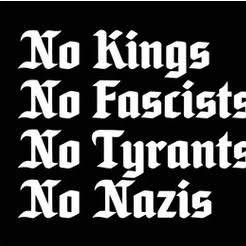
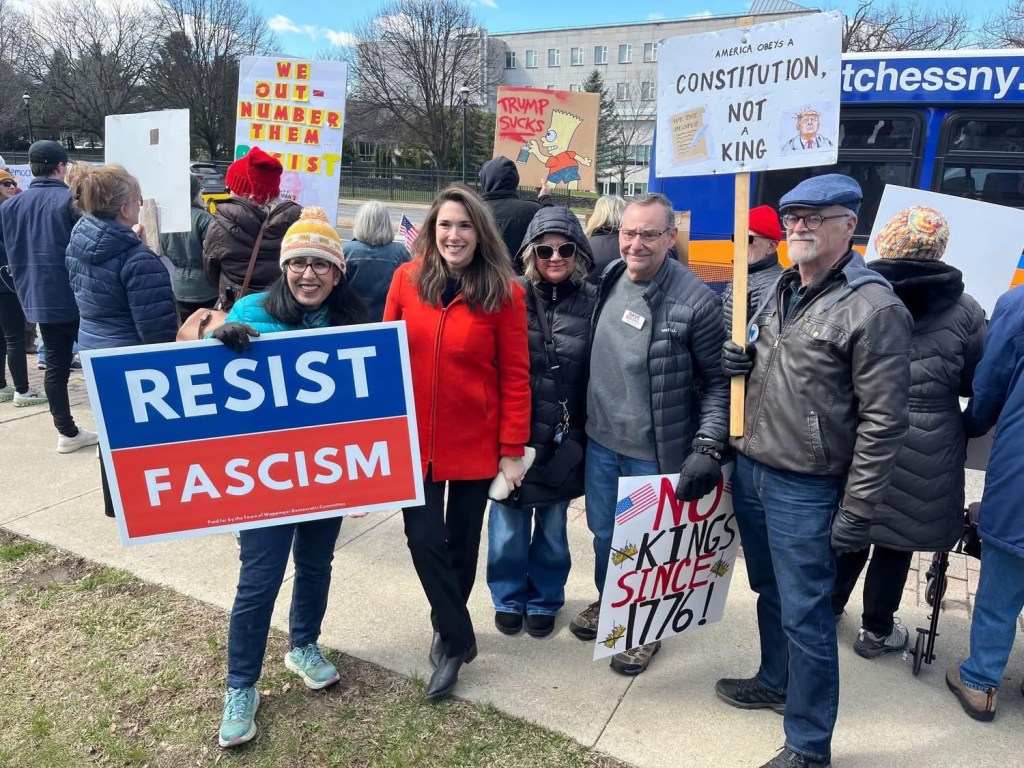
And let’s be clear about something else: these images aren’t случай snapshots taken out of context. They are pulled directly from Dutchess County Legislative candidate David Siegel’s own Facebook campaign page. This is what is being showcased. This is what is being promoted.
What you’re looking at isn’t just a group of people holding signs. It’s a snapshot of a political culture that has become increasingly performative, increasingly slogan-driven, and increasingly detached from real governing.
“Resist Fascism.”
“No Kings Since 1776.”
“Constitution, Not a King.”
They’re punchy. They photograph well. They’re designed to travel. But what do they actually mean in practice?
Because here’s where this crosses a line—from rhetoric into recklessness.
We now have a political candidate, David Siegel, casually throwing around the word “Nazi.”
Think about that for a moment.
That word is not a prop. It is not a campaign slogan. It is not something you deploy because it gets attention or fires up a base. It carries the weight of history—of genocide, of real tyranny, of unspeakable human suffering.
And now? It’s being reduced to just another talking point.
You don’t get to do that.
You don’t get to redefine one of the darkest words in human history to score political points in a local race. You don’t get to casually attach that label to your opponents because it’s convenient or effective in the moment.
That’s not leadership. That’s intellectual laziness at best—and something far worse at its core.
Because when you call your political opponents Nazis, you are no longer debating them. You are dehumanizing them. You are saying they are beyond reason, beyond discussion, beyond legitimacy.
And once you do that, where exactly does the conversation go from there?
It doesn’t. It ends.
And that’s exactly what we’re seeing play out here.
Look at the signs again. Not a single policy. Not a single idea. Just labels. Just outrage. Just identity built around opposition.
But resistance to what, specifically?
And more importantly—what’s the alternative?
Because governing isn’t about standing on a sidewalk holding a sign. It’s about making decisions—hard ones—that affect real people in real ways. It’s about trade-offs, accountability, and results.
And here’s the deeper danger:
When everything becomes “fascism”… when every opponent is a “Nazi”… when every election is framed as the end of democracy…
Then nothing means anything anymore.
You cheapen the language. You numb the public. And when a real threat emerges—if one ever does—you’ve already spent the currency of credibility.
Look—I’m not dismissing the right to protest. That’s fundamental. That’s American.
But protest used to be the beginning of a conversation.
Now, too often, it’s the end of one.
And when candidates themselves start escalating the language to “Nazi,” that’s not leadership.
That’s gasoline on a fire that’s already burning too hot.
Shame on you, David Siegel.
You don’t get to redefine that word.
 The Valley Viewpoint