Albany’s Green Panic Button

A Valley Viewpoint Narrative

Every now and then, Albany has a moment of clarity — usually right after it has already driven into the guardrail.

This week, that moment arrived in the form of whispers: state leaders may delay implementation of New York’s sweeping climate mandates. Not scrap them — just press “snooze” on a law that was written with the enthusiasm of a college debate-team manifesto and the practicality of a Manhattan parking spot.

The Climate Leadership and Community Protection Act — the crown jewel of Albany environmental virtue — promised that New York would heroically transform its energy system by 2030. Fossil fuels out. Renewable everything in. Electric heat, electric stoves, electric cars, electric unicorns — all powered by a grid that, conveniently, does not yet exist.

It sounds bold. Until you realize bold and blind are cousins.

The costs? Through the roof. Utility bills climbing like ivy on an old stone house in Rhinebeck. Building projects stalled. Homeowners staring down five-figure upgrade requirements. Businesses wondering if it’s cheaper to move to New Jersey — and that’s when you know the situation is dire.

And then there’s the reliability issue. Nothing says “modern energy policy” like telling people to buy electric heat while the grid is already strained every time we collectively plug in a hairdryer during January. That’s not planning — that’s hoping.

Let’s be clear: clean energy is a good and necessary pursuit. Nobody is sitting here rooting for smokestacks and smog. But ambition without arithmetic is not leadership — it’s ideology. And ideology, when it ignores economics and engineering, becomes cruelty dressed as idealism.

Albany is now debating whether to delay. But delay isn’t courage — it’s procrastination with press releases.

If a plan is unworkable, you don’t stretch the deadline — you change the plan.

The Hudson Valley knows a policy boondoggle when it sees one. We’ve watched from our river towns as New York City lawmakers imagine an upstate electric grid powered by windmills, good intentions, and maybe a very large extension cord from Vermont.

The choice ahead is simple: Do we double down on a law written to impress activists, or do we craft a responsible path — one that protects the environment and the people who pay the bills?

Ambition with reality — that’s good policy.

Ambition without it? That’s Albany.

And so here we are — watching our leaders inch toward admitting what homeowners, small businesses, landlords, and local governments figured out years ago: the math never penciled out.

Delay if you want. But eventually, New York has to decide —

Do we want to lead on climate policy, or do we want to congratulate ourselves while people can’t heat their homes?

In the Valley Viewpoint, we prefer heat — and honesty — over hashtags.
When Victory Turns to Vandals: LA’s Championship Shame

A Valley Viewpoint Narrative

There’s a funny thing about America’s great celebrations. We love the roar of triumph, the confetti, the civic pride swelling in the chest when a hometown team finally brings it home. The Dodgers did just that — a World Series crown, earned over seven games, the kind of Hollywood ending Los Angeles lives for.

And what did some in that same city do with that moment?

They burned it.

Not in memory — in literal flames.

Instead of champagne popping and kids on shoulders waving blue towels, we got streets overrun, buses torched, fireworks fired at police officers, and tear gas billowing through downtown like a war-zone training exercise. Officers hit with explosives, crowds surging, storefronts rattled. The city didn’t watch a celebration that spilled over — it watched pride descend into a tantrum.

Once again, the script writes itself:
Victory on the field, chaos in the streets.

We always hear the excuses:
It’s just passionate fans.
It’s youthful energy.
It’s a few bad apples.

Funny — those “few bad apples” always seem to show up right on cue when the sun goes down and accountability is off the clock. We manage to hold parades in cities across America without turning downtown into a demolition derby — yet somehow, in moments where civic pride should be at its highest, we see the worst instincts crawl out.

Here’s a radical idea:
If your team wins and you respond by looting, lighting fires, and attacking cops, you’re not a fan — you’re a vandal with a foam finger.

LAPD officers didn’t go out last night looking for a fight. They went out hoping to keep the peace while neighbors celebrated something joyful. But when fireworks become weapons and beer bottles become projectiles, police don’t have the luxury of waiting for someone’s moral compass to kick in. Tear gas isn’t a party trick — it’s a last resort.

To the 99% of fans who celebrated with class: thank you. You represent what sports are supposed to be about — community, pride, memory. Kids seeing their heroes delivered glory, not seeing their city set on fire.

But to the street-riot hobbyists treating a World Series like an excuse to cosplay “The Purge” — ask yourself this:

If you destroy the city that hosts your triumph, did you really win anything at all?

The Dodgers earned their glory.
Los Angeles deserved a victory lap.
And instead, a loud, reckless minority handed the headlines to chaos instead of champions.

Next time, let’s remember:
A win is for lifting each other up — not tearing the city down.

And if you can’t tell the difference between celebration and destruction?

Maybe the problem isn’t the game.

It’s the team you play for up here — in the head and in the heart.

When the Robes Become the Resistance

A Valley Viewpoint Narrative

There’s a quiet rebellion underway in America’s courts — and it’s not the romantic, principled kind some would like you to believe.

More than 100 federal judges — including several appointed by Republican presidents — have stepped in to block the Trump administration’s mandatory-detention policy for individuals in deportation proceedings. More than 200 rulings, each one chipping away at the ability of the executive branch to enforce immigration law passed by Congress.

Now, let’s pause right there.

We live in a nation where borders mean something — or at least, they used to. Where sovereign nations retained the right to detain those who enter illegally while their cases play out. It’s not a radical concept. It’s basic governance, practiced by nearly every nation on the planet.

But in today’s America, a growing faction of the judiciary seems less interested in law and more interested in ideology. Instead of respecting congressional authority, they stretch interpretations, invent “rights” that don’t exist, and substitute their judgment for that of elected officials charged with protecting the country.

We aren’t witnessing the noble guardians of liberty the media loves to celebrate. We are watching the rise of the judicial class that believes policy is their domain — not voters’, not Congress’, not the President’s. A system where judges decide what immigration enforcement “should” look like, even if the law says otherwise.

And here’s the part folks in the Hudson Valley understand better than most:
When law becomes subjective, when enforcement is optional, when judges rewrite statutes to suit social preferences — that’s not balance. That’s not constitutional guardianship.

That’s policy by robe.

You can oppose Trump. You can be skeptical of his rhetoric. That’s fine — disagreement is part of the American fabric. But if judges become a political flank instead of referees, we lose more than a policy debate.

We lose the principle that elections have consequences.
We lose the system where the people decide.
We move from self-government to government by insulated elites in lifetime seats — folks who answer to no voter and feel accountable to no one.

This isn’t a constitutional triumph.

It’s a warning shot.

Because if judges can halt immigration enforcement today, simply because they don’t like the policy, what makes you think they won’t override something you believe in tomorrow?

When unelected power grows, liberty shrinks — quietly, politely, with gavel taps instead of executive orders. And history has shown us: that’s the kind you notice only when it’s too late.

Out here in the Valley, we know something simple and old-fashioned:

Laws aren’t suggestions.
Borders matter.
Democracy means the people set policy — not the bench.

And if that is controversial in 2025, the problem isn’t the Constitution.

It’s the people who think they’re smarter than it.

When Democracy Becomes Optional

A Valley Viewpoint Narrative

You can learn a lot about the future of a community by watching who shows up to vote when nobody’s looking.

Here in the Hudson Valley, we pride ourselves on being plugged-in — engaged, opinionated, committed to our towns, our schools, and our sense of place. But the numbers tell a different story, especially among the youngest voters.

In the big, emotional national elections — the kind with wall-to-wall cable coverage and stadium rallies — voters in our region turn out at healthy levels. Roughly 64% of eligible adults in the Hudson Valley cast ballots in 2020. That’s the Valley doing its duty.

But then the cameras leave, the hashtags fade, and democracy goes quiet. And when that happens, turnout drops like a stone — down to 47% in 2022. That’s not a swing — that’s a collapse.

And if you zoom in on younger voters, the picture gets even dimmer. Statewide studies show the registration rate for 18-year-olds lags far behind the pace at which young people become eligible to vote. That’s not apathy — that’s the quiet beginning of civic absenteeism. The belief that participation is optional. That someone else will handle the decisions that shape their world.

The irony? When you ask young people whether they would learn about voting in a dedicated class, 40% say yes. The curiosity is there. The interest is there. But turning that interest into action — turning civic awareness into civic habit — that’s where the wheels fall off.

And this isn’t some abstract philosophical problem.

In school board elections across the region, turnout often scrapes single digits. Five to ten percent of eligible voters picking the people who decide school budgets, curriculum direction, infrastructure, and long-term investment in the next generation. The very group that stands to inherit the consequences — the students — largely doesn’t show up. Or can’t. Or doesn’t think it matters.

This is how a democracy frays — not with mobs in the streets, but with quiet shrugs. With “I don’t know enough.” With “it’s just local.” With the belief that real politics only happens in Washington.

But here in the Valley, we know better.

We know the most tangible power — the kind that fills potholes, funds schools, polices streets, and shapes neighborhoods — lives right here at home. In board meetings and town halls. On county ballots and school district lines.

The danger isn’t that young people disagree with us.
The danger is they don’t show up at all.

Because when the future stops voting, the future stops belonging to them.

And sooner or later, they’ll wonder how decisions were made — who drew the map, who set the taxes, who chose the priorities. And the answer will be simple:

Whoever bothered to show up.

That’s the quiet lesson here in the Valley. Democracy doesn’t die loudly. It fades quietly — not from anger, but from indifference.

And indifference, unlike ideology, never builds anything.

It just leaves the field open for whoever still thinks it’s worth playing.

The Biden Cover Up

A Valley Viewpoint Narrative

When history looks back on the Biden presidency, it won’t just record a leader who faded. It will record a party that knew — and continued anyway. A presidency not defined by bold leadership or principled stands, but by the decision to prop up a man in decline because his frailty was politically convenient.

Joe Biden did not seize power. Power was placed around him like scaffolding. And when the scaffolding began to wobble, when the public saw flashes of confusion and fatigue, the Democratic Party did not step in with honesty. They stepped in with protection, calculation, and spin.

This is not compassion. It is exploitation.

Instead of guiding him toward dignity, they guarded the optics. Instead of telling the truth, they told the country to ignore what their own eyes could see. Every carefully managed entrance, every truncated statement, every moment he appeared more handled than leading — the country witnessed it all. And behind it stood a political apparatus that put holding power above respecting the office or the man who occupied it.

This is the shame of the current Democratic Party.

They did not merely fail to notice decline — they weaponized it. They treated a human being like a firewall and a placeholder, not a president. They wrapped themselves in language about “stability” and “norms” while quietly running a presidency by surrogate. They claimed the moral high ground, all while asking America to pretend that the emperor still read every brief and made every decision.

At some point, it stopped being politics and became theater. And the world saw it. Adversaries exploited it. Allies worried. And Americans — whether they admit it publicly or mutter it privately — felt something was fundamentally wrong.

Joe Biden deserved truth. The country deserved leadership. Instead, both got management.

This wasn’t noble loyalty. It was political self-preservation disguised as patriotism. And the legacy will not be one of grace — but of calculation. The kind where a party convinced itself that maintaining power justified anything, even turning the presidency into an extension of staff and strategy teams rather than the seat of a fully present leader.

In the Hudson Valley, we call things plain: there is nothing honorable about using a man’s decline as a governing strategy. There is nothing courageous about denying obvious reality to preserve political advantage. And there is no version of democracy where the people are served by a leadership class that treats truth as a variable rather than a duty.

The tragedy is Biden’s. The responsibility is the Democratic Party’s. And the shame belongs to both.

Because power should be earned, not concealed behind carefully lit stages and escorted exits. And history will remember that, in a moment requiring candor and courage, they chose convenience instead.

When Justice Becomes a Family Business

A Valley Viewpoint Narrative

Every now and then, a story cuts through the political fog and reminds us why public trust isn’t lost in a single moment — it’s eroded drip-by-drip. This week, that drip came from the Brooklyn courthouse, where the supposed guardians of justice are meant to stand above the political hustle.

The report? Judge Lawrence Knipel, the former administrative judge of Kings County Supreme Court, allegedly handed out 881 court appointments — guardianships, receiverships, lucrative fiduciary roles — to just 25 attorneys over a three-year span. These weren’t random selections from a transparent merit-based pool.

No — many of those lucky recipients were contributors to political committees tied to Knipel’s wife, Lori Knipel, a Brooklyn Democratic district leader.

Let me say that again: lawyers donate to the judge’s spouse’s political operation… and soon find themselves appointed to some of the most financially rewarding court posts in New York’s legal system. A revolving door? No — this was a VIP entrance reserved for those who knew where to write the check.

Guardianship appointments — the kind of cases where the court entrusts a lawyer with managing the affairs of vulnerable elderly or incapacitated individuals — are supposed to be about trust, objectivity, and protection. Instead, they may have become a form of currency in a political patronage market disguised as judicial discretion.

We’ve long known New York’s party machines still breathe. But when the judiciary — the last refuge for the ordinary citizen — starts to look like a family franchise, that’s not just insider politics. That’s a breach of the public trust.

And let’s be clear: if this were happening in a sheriff’s office in Dutchess or a town hall in Ulster County, there would already be cameras, subpoenas, and a parade of officials swearing, “This is not who we are.”

But in the insulated world of New York City Democratic politics — where judicial nominations are brokered in back rooms and reform commissions have all the bite of a defanged housecat — the machine keeps humming.

Because nothing protects corruption like one-party comfort and a culture immune to shame.

The judiciary is supposed to be the great equalizer. For the pro-se litigant walking into court with nothing but a folder and hope. For the elderly parent whose future depends on an honest guardian. For the citizen who believes — still — that the law belongs to everyone.

Instead, we get a courthouse that looks suspiciously like a patronage bank for those with the right friends and the right fundraiser RSVP list.

The People of New York deserve better. Transparency. Competition. Scrutiny. A judiciary that earns respect — not trades it for campaign checks.

If the courts won’t clean their own house, then it’s time the public — and the press — keep pulling back the curtain. Because sunlight isn’t just disinfectant; in New York’s courthouse culture, it may be the last remaining antidote.

Justice cannot survive as a family business. Not here. Not anywhere.

The Path

We imagine careers — and life — as linear.

As if the path is supposed to look like this:
Study → Get hired → Get promoted → Lead → Retire.

But real life doesn’t run in straight lines.
It loops. It stalls. It breaks. It rebuilds.
It asks you to bet on yourself again… and again.

And then one day — often later than you planned — it clicks.

Somewhere along the way you hit that Jimmy Buffett moment:
“I’ve proven who I am so many times
The magnetic strip’s worn thin.”
You realize you’ve checked the boxes, earned the titles, fought the battles…
and still feel the pull to chase something new.

That’s not a crisis. That’s renewal.

The leaders who allow themselves to begin again
create space for others to do the same — and that’s where innovation, loyalty,
and genuine humanity show up.

In business AND in life:

Career

  • Miss revenue at 33? Rebuild the Go To Market strategy at 34.
  • Hire wrong? Own it, reset the scorecard, hire better.
  • Launch and flop? Keep the lessons, lose the shame.

Life

  • Marriage ends in your 40s? Heal, rediscover yourself, love again in your 50s.
  • Kids leave home? Turn the quiet into purpose — not emptiness.
  • Lose faith in a dream? Trade it for a better one, not resignation.
  • Wake up at 67 and feel that spark again? Follow it — it’s still yours.

Winners aren’t the ones who never fall.
They’re the ones who rise — and bring others with them.

So start at 30.
Fail at 33.
Reinvent at 34.
Rebuild at 44.
Catch fire at 54.
And yes — still find your passion at 67.

Because life isn’t a ladder — it’s a series of doors.
When one closes, you don’t freeze.
You turn, you knock, you walk.

Just don’t stop building. Ever.

The Coat

It’s that time of year when coat drives start popping up — cardboard boxes in church lobbies, collection bins in school hallways, radio announcements asking people to help keep kids warm. And every year, without fail, I go back to one memory.

Grammar school. Winter settling in. The kind of cold that bites a little harder when you’re young because you haven’t yet learned how to pretend you don’t feel it. There was a boy in my class — quiet, thin, always watching the world more than taking up space in it. And he didn’t have a real winter coat. Just a thin jacket and hands stuffed into pockets for dear life.

I mentioned it to my mother. Just casually — not as some act of childhood nobility, but the way a kid notices something and says it out loud. She didn’t say much back. She just nodded in that way mothers do when they’ve already decided the next twelve steps in their mind.

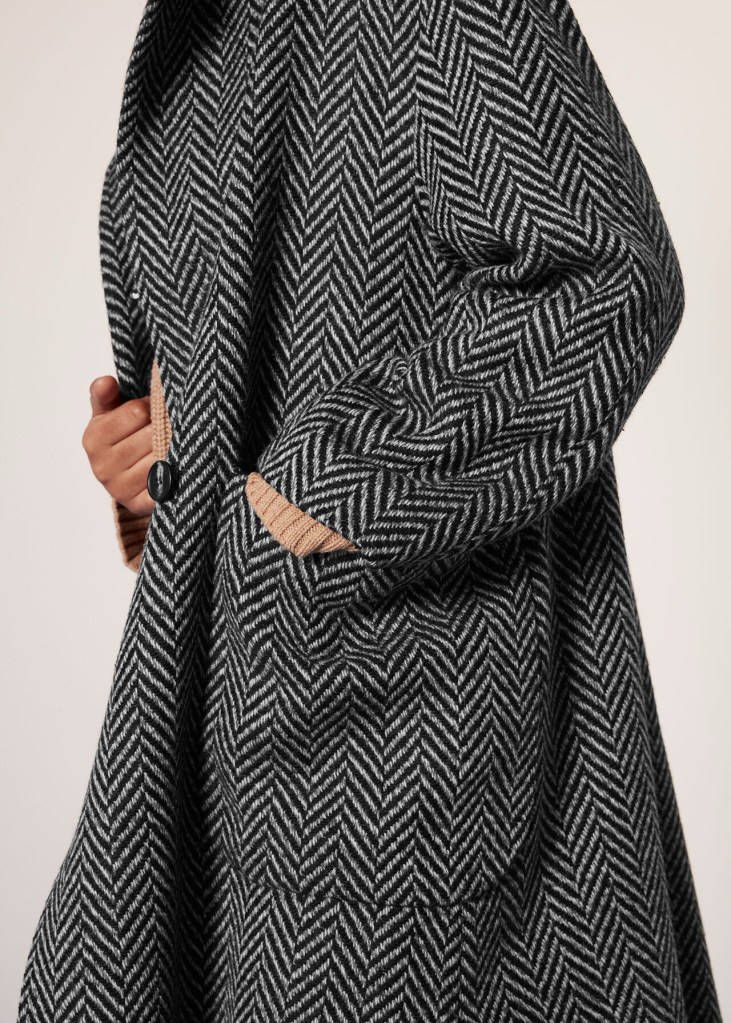
The next afternoon my father came home carrying a department store bag. Inside was a herringbone coat with a fake fur collar — oversized, a little ridiculous looking, like it belonged on a retired bookmaker holding court at a Bronx bakery. But it was new. It was warm. It mattered.

My mother handed it to me and said, very simply, “Give this to your teacher tomorrow.”

And she added something else — something that stuck even deeper:
“Don’t say anything to anybody.”

No boasting, no story, no pat on the back. She wasn’t interested in applause or teaching me how to feel noble. She called the teacher that night, quietly, and told her I’d be bringing a coat in. No drama — just dignity.

The next day, I slipped the bag to the teacher. She nodded, took it gently, and tucked it deep into the closet like she was placing it in a vault. When school ended, she asked that boy to stay behind as the rest of us filed out.

The following morning he walked into class wearing that coat. And I will never forget the look on his face. He didn’t look embarrassed. He didn’t look “helped.” He stood a little straighter. His shoulders loosened. He smiled — wide, real, proud.

It wasn’t charity. It was warmth, but more importantly, it was dignity.

And somewhere in my child-brain, without having the words yet, I learned something about my parents. Generosity doesn’t need witnesses. Kindness doesn’t need credit. Real giving is done quietly — without telling stories later about how you did it, without expecting gratitude, without needing the world to know.

Every winter when I see coat drives, I remember that boy. That coat. That smile. And I remember my mother making sure he was warm — and making sure he was never made to feel small in the process.

The world could use more of that kind of warmth.
Quiet warmth.
Private kindness.
The kind that slips a coat into a closet and changes a kid’s winter.

Lord, take me where you want me to go.” — Words we need now as much as ever

As last week closed—a week where we marked the 24th anniversary of the 9/11 attacks, and a week where we also watched, stunned, as Charlie Kirk was assassinated before our eyes—I wanted to share these words.

Lord, take me where you want me to go.
Let me meet who you want me to meet.
Tell me what you want me to say,
And keep me out of your way.

This is not my prayer. It comes from Father Mychal Judge, the Franciscan priest and chaplain for the New York City Fire Department, who was killed ministering to a fallen firefighter at the World Trade Center on 9/11. Father Mychal carried these words on cards, giving them to anyone who needed strength.

On September 10, 2001, he had run out of those cards and asked a fellow chaplain to bring him more. The next morning, he was gone. His prayer, however, lived on, giving comfort to first responders, families, and a city in grief.

And now, this week, as we face new grief—watching political violence strike down Charlie Kirk in front of his wife and children—we again find ourselves in need of words like these. Words to steady us. Words to remind us that, even in tragedy, we are called to keep moving, to meet who God puts in our path, to speak truth, and to not let fear or hatred dictate our steps.

Lord, take me where you want me to go.
Let me meet who you want me to meet.
Tell me what you want me to say,
And keep me out of your way.

Trust in the Courts at Stake: Judge Berry Must Step Down or Be Removed.

BREAKING NEWS: Ohio Judge Caught Celebrating Charlie Kirk’s Murder

Hamilton County Judge Ted Berry is under fire after vile public posts applauding the assassination of Charlie Kirk. The fallout has already begun: the Joe Burrow Foundation cut ties immediately, removing him from its advisory board.

Berry’s own words leave no room for dispute:
• “Rest in Hatred & Division!” (posted hours after Kirk’s death)
• “How’s he feel about gun violence & gun control in Hell, now?”
• “So, a white guy killed him! Color it KARMA!”

These weren’t overheard remarks. They were public posts by a sitting judge—a man sworn to impartiality and fairness. Now, the Ohio Office of Disciplinary Counsel is investigating whether he violated the Code of Judicial Conduct, and formal grievances have already been filed.

I’ve always used my platforms—on the radio and in my social media posts—to call attention to what judges do, because their words and actions have lasting consequences on people’s lives. This is a prime example of why we cannot look away.

The damage goes far beyond one foundation board seat. How can any citizen expect a fair hearing in Berry’s courtroom when he openly celebrates the murder of a political opponent? Justice must be blind—but Berry mocked that principle in broad daylight.

And this is not his first scandal. In 2021, a female court employee accused Berry of harassment, saying he bombarded her with unwanted Facebook messages, pressured her for drinks, sent explicit content, and invited her to his chambers with promises of an “offer you can’t refuse.” State disciplinary authorities confirmed he violated the judicial code then, too.

Ted Berry has chosen hatred over his oath. He has disgraced his bench, violated public trust, and mocked the very idea of blind justice.

Being dropped from a charity board is only the beginning. For the integrity of the judiciary—and for every American who expects equal justice—Berry must resign or be removed.

Anything less leaves a permanent stain on the courts.

Toby’s Eyes

Toby’s eyes are where the world softens. They are not loud or dazzling, not made to catch attention, but they hold me with a gentleness that nothing else does. Brown and steady, warm as earth, they rest on me as if to say: you are here, and that is enough.

There is no hurry in Toby’s gaze. When the day spins too quickly, his eyes remind me of stillness. They carry patience like a river carries water—without effort, without end. I look into them and feel something loosen inside me, as though I can finally set down whatever I’ve been carrying.

His eyes do not measure or weigh; they do not ask for explanations. They simply meet mine, and in that meeting I feel known. There is a quiet trust in the way he looks, a trust that asks nothing more than that I return the moment, that I stay.

Sometimes there is mischief flickering there, a spark that makes me smile before I realize it. Other times there is only calm, deep and unwavering, as if he is keeping a watch the world will never notice but I will always feel.

Toby’s eyes are not extraordinary because of what they see. They are extraordinary because of how they see—steadily, faithfully, with a kind of love that does not need words. They are the soft light I carry with me, the gentle reminder that presence itself can be enough.

Back in time

If I Could Go Back

If I could travel back in time, I wouldn’t go to some famous moment in history. I’d go home. Back to my parents’ kitchen table, to sit across from them—not as their child, but as the adult I am now, carrying the weight of the world we’re living in.

I’d tell them about the day the towers fell, and how September 11 changed everything. How the skyline itself became a wound, and how our sense of safety was shattered in an instant. I’d try to explain what it was like to live through those weeks—flags waving from porches, neighbors holding each other close, and at the same time, a fear so deep it still echoes today.

And then I’d have to tell them about now. About how even after all we endured, the divisions grew deeper instead of healing. I’d tell them that Charlie Kirk, a man who spoke his mind—sometimes too bluntly, always too loudly for some—was gunned down in the street. That in this America, words can make you a target, and that freedom of speech isn’t just debated in classrooms anymore; it’s contested with violence.

And I would talk about our family—the family they knew, the one that once gathered around Sunday dinners and birthday cakes. I’d have to tell them how even we, bound by blood and history, sometimes find ourselves divided by how we see the world. How the arguments that play out in the headlines can find their way into living rooms and phone calls, leaving behind silence where conversation used to be. That would hurt them most, I think. Because they raised us to be stronger together than apart.

I’d want to see the look on their faces, to know how they would react. Would they shake their heads in disbelief? Would they say they saw it coming? Or would they remind me, as they always did, that even in the darkest times, we have a choice—to surrender to fear, or to hold onto hope.

Because as much as the world has changed, the lessons they gave me haven’t. That faith matters. That family matters. That truth matters, even when it’s dangerous to speak. Those lessons are the anchor that makes the chaos survivable.

And oh, what I’d give to hear one more time my Aunt Sissy cut through it all with her voice, laughing and rolling her eyes, saying, “Bullshit, Alfie,” when told what the world is like now. That one phrase carried more honesty than any op-ed, more grounding than any headline. It was her way of reminding us not to be swallowed by fear or swallowed by lies.

If I could go back, maybe I wouldn’t just tell them about the world I live in now. Maybe I’d ask them the question that haunts me: how do we live without losing ourselves, when the ground keeps shifting? How do we raise our children in a world where towers can fall, where voices can be silenced, where even dads can be taken too soon?

And maybe, just maybe, they’d answer me the way they always did—with something simple, something steady: We keep going. We hold each other close. We don’t stop believing that tomorrow can still be better.

That’s what I’d want to bring back with me—not just their words, but their faith that even in a broken world, love still holds.