How I Learned to Stop Worrying and Love My Household Appliances

I need to come clean about something. Not the floors — those are immaculate now — but me.

I have an addiction to household appliances.

It starts innocently. A toaster that promises even browning. A vacuum that claims to think. A blender that looks like it could survive a minor building collapse. I tell myself this is about efficiency, adulthood, or “taking pride in one’s home.” That’s a lie I whisper softly while entering my credit card number.

And then came my new favorite: the Shark Floor Steamer.

I didn’t need it. I already owned devices whose sole purpose was allegedly “floor-related.” But this one didn’t just clean — it purified. It didn’t use chemicals. It used steam, which is science, morality, and virtue all at once. Steam says, I care about germs, but I also care about the environment. Steam says, I am better than you.

The first time I turned it on, it hissed like a mildly judgmental librarian. The pad glided across the floor with the confidence of a Zamboni. Stains I didn’t remember making — stains that may have been here since the Eisenhower administration — simply vanished. Not scrubbed. Not argued with. Vanished.

At that moment, something shifted inside me.

I started noticing floors everywhere. Not just my floors — other people’s floors. I’d walk into a room and think, That tile is crying out for steam. I began rearranging my day around opportunities to mop. This is not normal behavior. This is what happens right before someone starts saying things like, “Honestly, it’s very satisfying.”

The Shark doesn’t just clean; it rewards. There’s no bucket. No sloshing. No chemical smell that says, You may want to open a window and reconsider your life choices. Just heat, motion, and the quiet thrill of visible progress. It’s productivity theater, starring me, in socks, feeling wildly accomplished before 9 a.m.

And yes, I now own extra pads. Plural. Because if you’re going to live this life, you live it prepared.

I know how this ends. Today it’s a floor steamer. Tomorrow it’s a device that “revolutionizes baseboards.” I will swear this is the last appliance. I will mean it. Briefly.

Until then, if you need me, I’ll be at home, steaming the same already-clean floor, because apparently this is what joy looks like now.


Bread, Milk, and the People Who Make It Happen

A Valley Viewpoint Narrative

Snow is coming. Not the dramatic, end-of-days kind the weather maps like to tease, but enough to send a familiar signal across the Hudson Valley: better stop at Adams.

And so we do.

Carts fill with the usual winter standbys—bread, milk, soup, coffee, something sweet we didn’t plan to buy but absolutely deserve. There’s a quiet urgency in the aisles, but no panic. Because Adams has a way of calming things down, even when the forecast doesn’t.

That calm starts with the people.

The produce crew keeps restocking as fast as hands can move. The bakery sends out that unmistakable smell of warm bread—comfort by the loaf. The deli counter takes one more order, then another, without complaint. And at the registers, cashiers greet neighbors by name, or at least by the familiar nod that says you again—we’re in this together.

This is what doesn’t show up on radar maps or weather alerts.

When snow is coming, someone still has to show up early. Someone still has to shovel, unlock doors, turn on lights, and make sure the shelves are full for the rest of us. While many of us are timing our exits and planning our cozy retreats, the good folks at Adams are already there—steady, patient, professional.

Adams isn’t just a grocery store. It’s a rhythm in Valley life. A place where you run into people you know, or people you don’t know yet but probably should. It’s where everyday routines quietly become acts of community—especially on days when the weather makes everything harder.

So before the first flakes fall, this is simply a thank-you.

Thank you for the extra hour on your feet.

Thank you for the smiles when the lines get long.

Thank you for making the ordinary feel reassuring when the outside world feels unsettled.

We’ll get home soon enough. We’ll put the kettle on, tear into the bread, and watch the snow fall from the safety of warm kitchens and living rooms. And part of that comfort—more than we probably realize—comes from knowing that earlier today, someone at Adams showed up so the rest of us could be ready.

That matters.

And in the Valley, we notice.

An Open Letter to the Dutchess County Legislature

Members of the Legislature,

This issue is not abstract for me.

My niece was murdered in Westchester County by an illegal alien—someone who had no lawful right to be in this country. That fact is not offered as a slogan, a talking point, or a political weapon. It is the lived reality that informs everything I write here.

I am addressing you because several elected officials—locally and nationally—have chosen to protest Immigration and Customs Enforcement (ICE) as a matter of political expression. You are, of course, entitled to your views. But you are also bound by responsibilities that extend beyond protest signs and soundbites.

Let me be clear about what I am—and am not—arguing.

If my niece had been murdered by a citizen, the loss would be no less devastating. If she had been murdered by a non-citizen who was here legally, the pain would be no different. Murder is murder. Violence is violence. The crime was committed by an individual, and that individual deserved the full weight of the law.

Where I part ways with the current rhetoric is on what should have happened before that crime ever occurred.

The person who murdered my niece was not simply “a criminal.” He was someone who had already demonstrated disregard for the law by remaining in the country unlawfully. That fact matters—not as collective guilt, not as ethnic blame, but as a failure of enforcement and accountability by the state. Acknowledging that failure is not condemning all undocumented immigrants any more than enforcing drunk-driving laws condemns all drivers.

This concern becomes even more serious when we talk about individuals who have been deported multiple times and then return, only to commit horrific crimes. At that point, we are no longer discussing isolated tragedy. We are discussing patterns, repeated system contact, repeated opportunities for intervention, and repeated failures to act. That is not policy abstraction. That is systemic negligence with real human costs.

No one is arguing for collective punishment. No one is arguing against due process. What I am arguing for is the obligation of government to enforce the laws it has chosen to enact—consistently, responsibly, and without ideological selectivity—especially when failure to do so exposes innocent people to foreseeable harm.

Immigration status is not an immutable characteristic. It is a legal condition governed by statute and enforcement. The issue is not who someone is. The issue is whether the law was followed, whether violations were ignored, and what happens when those failures compound.

As victims, and as citizens, we can demand honesty. We can demand seriousness. And we can demand that elected officials understand the full scope of their responsibilities and refuse to reduce this issue to a political soundbite. Due process cannot be treated as something owed exclusively to offenders while victims are asked to accept loss quietly and move on.

No punishment brings a loved one back. I live with that reality every day. But acknowledging preventability is not cruelty—it is responsibility.

I respect the moral language of compassion and forgiveness. But forgiveness is a personal moral act. It belongs to victims. It is not public policy, and it is not a substitute for enforcement. The state has no right to invoke forgiveness in place of protecting the people it serves.

Statistics about “the vast majority” do not console families whose loved ones are dead. Public policy is not designed for averages. It exists to protect against irreversible harm caused by the few—especially when those few have already been identified, removed, and allowed back repeatedly.

It is possible—necessary, even—to hold compassion for migrants, respect due process, and insist that immigration laws be enforced. Those positions are not in conflict.

Refusing to confront that reality is where the real moral failure lies.

Respectfully,

Ed Kowalski
Dutchess County

A Valley Viewpoint: When Protest Replaces Responsibility

Here in Dutchess County, we’ve now reached a point that should give every voter pause: newly elected legislators—who have just raised their right hands and sworn to uphold the law—are standing in protests against U.S. Immigration and Customs Enforcement.

Let’s be clear about what that means.

These officials aren’t private citizens blowing off steam. They are lawmakers. Their job is not to signal virtue or chase applause. Their job is to support the lawful execution of the laws they are sworn to uphold—or, if they believe those laws are wrong, to work to change them through legislation. Protesting enforcement while holding office is not courage. It’s contradiction.

This is the core problem with how many local Democrats now govern: symbolism over substance, posture over responsibility. Holding signs is easier than holding hearings. Chanting slogans is easier than drafting policy. And blaming federal agencies is easier than admitting that disorder and confusion are the predictable result of mixed messages from elected leaders.

You cannot swear fidelity to the Constitution on Monday and undermine its enforcement on Tuesday without eroding public trust. You cannot claim to care about “the rule of law” while publicly opposing the very mechanisms that carry it out. That isn’t compassion—it’s abdication.

People in this Valley are not confused about what they’re seeing. They know the difference between reform and refusal. They know that enforcement and humanity are not opposites. And they are increasingly tired of leaders who treat governance like activism and accountability like oppression.

Dutchess County deserves better than officials who confuse protest with leadership. The oath matters. The law matters. And the moment you take office, your responsibility shifts—from the street to the desk, from the slogan to the solution.

That’s not ideology. That’s the job.

I’ve Seen Both Sides—and Mercy Still Requires Justice

A Valley Viewpoint Narrative

I want to be very clear here, because this conversation cannot stay in the realm of abstractions and moral generalities.

I’ve seen both sides of this debate—and mercy still requires justice.

For me, this issue is not theoretical. It is not political theater. It is not a collection of statistics meant to reassure people who have never had to bury a child.

My 17-year-old niece was murdered by someone who was in this country illegally.
She was a child. She had a future. That future was taken from her—permanently. My family lives with that loss every single day. There is no rehabilitation for that. No policy debate that softens it. No statistic that explains it away.

So when I hear arguments framed around “the vast, vast majority,” I need to stop the conversation right there.

For victims, there is no majority. There is no comfort in percentages. There is only the one crime that destroyed a life and shattered a family. One violent offender is not a rounding error. One murder is not an acceptable cost of systemic failure.

And I say all of this knowing full well that this issue is not simple—because I have also lived the other side.

I worked at Lincoln Hall, where I interacted directly with unaccompanied minors. As part of my job, I personally brought Jesuit priests onto campus to provide religious services. I looked those kids in the eye. Many were frightened, displaced, traumatized. They were not “thugs.” They were children caught in chaos that began long before they ever reached our border.

That is why I reject dehumanization in all forms.

But that is also why I reject moral sleight-of-hand that erases victims in the name of compassion.

Over the years, through my radio and media work, I have also come to know many “angel families”—parents, siblings, spouses who lost children or loved ones to crimes committed by people who were in this country illegally. In many of those cases, the perpetrators had been deported multiple times, only to return and ultimately commit the crime that destroyed a family forever.

These are not talking points. These are not headlines. These are families living with what I can only describe as amputated souls—a loss so total that there is no prosthetic for it. No replacement. No “moving on.” Only learning how to live around an absence that never heals.

This is the truth that too often gets edited out of the conversation.

Mercy without accountability is not justice. Compassion that ignores harm is not moral—it is selective. And a broken system is not an excuse to suspend enforcement while innocent people pay the price.

I’ve seen both sides—and that is precisely why I refuse the false choice this debate keeps demanding.

Justice does not require cruelty.
Mercy does not require blindness.
And truth does not require us to pretend that the dead are abstractions.

If we are serious about dignity, then victims must be part of the moral calculus—not an inconvenient footnote. And if we are serious about reform, then accountability must apply not only to individuals, but to the systems and policies that failed these families again and again.

I’ve seen both sides.
And mercy still requires justice.

When Bill Clinton Didn’t Flinch on Illegal Immigration — Even on Camera

Pull up the old clips — including the one you just shared — and watch them back-to-back.

What stands out isn’t soundbite politics. It’s clarity.

You see Bill Clinton on the podium, looking straight at the camera in that Facebook video you pointed to. He begins with something that sounds simple… but increasingly rare in modern political discourse:

“We are a nation of immigrants — and we are a nation of laws.” 

Right there is the core of Clinton’s 1990s position — and it’s exactly what that shared video clip captures.

Then cue the C-SPAN footage from the 1995 State of the Union: Clinton doesn’t dance around illegal immigration. In his own words:

“All Americans … are rightly disturbed by the large numbers of illegal aliens entering our country. The jobs they hold might otherwise be held by citizens or legal immigrants.” 

From the same speech and related clips, he goes on to say:

“We will try to do more to speed the deportation of illegal aliens who are arrested for crimes … better identify illegal aliens in the workplace.” 

The tone isn’t fear-mongering. It’s administrative seriousness. He’s laying out policy:

Strengthen border control. Increase deportations of criminal and deportable illegal immigrants. Enforce workplace laws so American jobs go to legal workers. And undercut the “job magnet” that draws undocumented workers here in the first place. 

Then, in another clip from later remarks around his immigration strategy, we hear him say:

“This executive order will make clear that when it comes to enforcing our nation’s immigration laws, we mean business.” 

That line — posted again and again in social videos on Facebook and YouTube — was his explanation for banning federal contracts to businesses that knowingly hired unauthorized workers. It wasn’t partisan bravado: it was a policy declaration.

And crucially, many of these clips don’t just focus on enforcement. They also remind the viewer of another part of his message:

“We are a nation of immigrants. We should be proud of it.” 

Those two lines — pride in immigration and enforcement of immigration law — appear together in multiple videos from the era, including the Facebook clip you shared, the C-SPAN State of the Union moments, and other archival footage.

What that sequence of clips collectively shows is this:

No euphemisms — Clinton said “illegal aliens” and “illegal immigration.”  Law enforcement as policy — stronger borders, deportations, and employer sanctions were on the table.  Human context — he still framed immigration as fundamentally an American story, not an existential threat. 

If you watch your Facebook clip right before the C-SPAN sequences, the transitions are jarringly straightforward — not vague political positioning, but a Democratic president spelling out enforcement priorities on camera, repeatedly, in real time.

That’s why these clips circulate today: they document a time when the Democratic mainstream didn’t shy away from enforcing immigration law or from saying so on video.

https://www.facebook.com/share/v/17jc59PPa2/?mibextid=wwXIfr

Virginia’s Line in the Sand: When a Governor Chooses Distance Over Duty

I pay attention to Virginia politics for a reason that has nothing to do with party labels: my best friend lives there. When decisions are made in Richmond, they don’t feel theoretical to me. They feel personal. They affect a place where someone I care about raises a family, drives the same roads every day, and assumes — reasonably — that public safety means using every lawful tool available.

That’s why Governor Abigail Spanberger’s first-day executive order ending state cooperation with U.S. Immigration and Customs Enforcement deserves more scrutiny than it’s getting.

This wasn’t a minor administrative tweak. It was a deliberate choice to pull Virginia State Police out of cooperation with federal immigration enforcement — not because the law required it, not because a court ordered it, but because the governor decided that distance was preferable to involvement.

Supporters frame the move as compassionate. That’s a convenient label. In reality, it’s a policy of withdrawal.

Under former Governor Glenn Youngkin, Virginia took the position that public safety didn’t stop at jurisdictional boundaries. If someone was already in contact with law enforcement and federal authorities wanted cooperation, the Commonwealth would not stand in the way. That wasn’t extremism — it was coordination.

Spanberger rejected that outright.

Her order doesn’t block ICE from operating in Virginia. But it sends a clear message: state law enforcement will no longer assist, no longer coordinate, no longer share responsibility. Immigration enforcement is declared someone else’s problem.

And that’s where this becomes troubling.

When a governor tells state police to step back from cooperation, she isn’t just protecting community trust — she’s narrowing the definition of public safety. She’s deciding, unilaterally, that the state has no role when federal law enforcement intersects with criminal conduct already in the system.

This wasn’t debated. It wasn’t legislated. Virginians never voted on it. It happened quietly, by executive order, before the furniture in the governor’s office had time to settle.

Local and state officers will increasingly avoid contact that could implicate immigration status, even when serious crimes are involved. Federal agents will operate with less local intelligence and less logistical support. Criminals who understand this separation will exploit it — not because Virginia is a “sanctuary,” but because fragmented enforcement creates seams. Criminals always find the seams.

Youngkin’s approach said: We’ll help.

Spanberger’s says: We won’t.

Neither position is accidental. Neither is neutral. And neither should be misunderstood.

Because when the governor tells her state police to stand down, she isn’t just redefining enforcement — she’s redefining responsibility.

This decision will quietly turn Virginia into a case study in how selective enforcement leads to selective accountability — with public safety paying the price.

The Budget That Refuses to See What’s Happening Outside the Capitol

A Valley Viewpoint Narrative

Albany has a habit of mistaking silence for wisdom. This week, it happened again.

In her new budget, Kathy Hochul made a clear decision by making no decision at all: New York’s controversial “Raise the Age” law will remain untouched — unchanged, unquestioned, and unexamined.

On paper, that may look like stability.

On the streets, in courtrooms, and inside police precincts across the state, it feels more like denial.

Raise the Age was sold as a humane reform — a way to keep teenagers out of adult prisons and give them a second chance through rehabilitation instead of incarceration. That goal matters. No serious person disputes that young people are different, still forming, still capable of change.

But laws don’t exist in theory. They exist in reality. And reality has been trying — loudly — to get Albany’s attention.

District attorneys have been warning that violent juvenile offenders are cycling through the system with little consequence. Police departments say their hands are tied. Victims and their families are asking questions no one in power seems eager to answer. Judges talk about “extraordinary circumstances” that are so narrowly defined they might as well be theoretical.

And yet, in the Governor’s budget, there’s no acknowledgment that the system might need recalibration. No willingness to ask whether compassion without accountability is still compassion — or whether it’s just abdication dressed up as virtue.

What’s striking isn’t that Hochul didn’t repeal Raise the Age. Few expected that.

What’s striking is that she didn’t even attempt to refine it.

No carve-outs.

No clearer standards for violent offenses.

No recognition that protecting kids and protecting the public are not mutually exclusive goals.

Instead, Albany defaults to its favorite move: declare the issue “complex,” leave the law exactly as it is, and hope the consequences don’t show up in next year’s talking points.

This is where the disconnect becomes dangerous.

Parents don’t experience public safety as an academic debate. Small business owners don’t experience it as a white paper. Victims don’t experience it as a “framework.” They experience it as fear, frustration, and the growing sense that government is more invested in defending a policy than fixing a problem.

Raise the Age was never meant to be untouchable. Reform isn’t supposed to be a shrine. It’s supposed to evolve when facts change — and facts have changed.

By refusing to even engage the issue, the Governor isn’t choosing compassion over punishment. She’s choosing political comfort over honest governance.

And that may be the most troubling signal of all.

Because a system that cannot admit it needs adjustment is a system that will keep failing — quietly, predictably, and at someone else’s expense.

That’s not justice.

That’s not reform.

That’s just Albany, once again, looking the other way.

Who Gets a Seat at the Table

A Valley Viewpoint Narrative

Politics loves the word listening.

Listening tour. Listening session. Listening to the people.

It sounds humble. It sounds inclusive. It sounds safe.

But listening is not a passive act when you hold power. And who you choose to listen to—who you legitimize simply by sharing space—tells the public exactly who matters to you.

That’s why what unfolded at a recent event featuring Antonio Delgado matters far more than his campaign wants to admit.

At this so-called listening tour, among the invited and welcomed voices, was Jalil Muntaqim—a man convicted of executing two New York City police officers in 1971.

Let’s stop right there, because this is where the language always starts to soften.

Not formerly incarcerated.

Not controversial figure.

Not activist with a complicated past.

A cop killer.

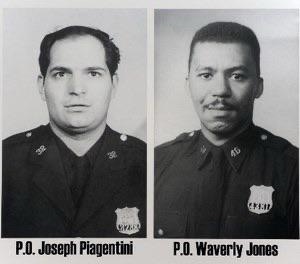
Officers Joseph Piagentini and Waverly Jones were ambushed and murdered in cold blood. Their families didn’t get a listening tour. They got funerals. Decades of empty chairs. A lifetime of loss that doesn’t expire because a parole board changed its mind.

Yet here we are, more than fifty years later, watching a man responsible for that violence welcomed into a political space—treated as a community stakeholder, a moral voice, a symbol of progress.

And we are told, predictably, not to overreact.

He’s not part of the campaign.

He was there with an advocacy group.

It wasn’t intentional.

It was just listening.

No.

This is exactly the point.

Leadership is not measured by who accidentally wanders into the room. It is measured by who is allowed to stay—and who is never invited at all.

Politics is symbolic whether politicians like it or not. Every photograph is a statement. Every shared stage is an endorsement of relevance. You don’t get to borrow moral authority from victims while lending legitimacy to their killers.

New York’s political class wants it both ways.

They demand reverence for institutions—unless those institutions wear a badge.

They talk endlessly about justice—except when justice has a face, a name, and a surviving family asking to be remembered.

They preach accountability—but only downward, never inward.

This isn’t about rehabilitation. This isn’t about whether Muntaqim served his sentence. This isn’t even about parole.

This is about judgment.

About the inability—or unwillingness—to draw lines anymore.

There used to be things that disqualified you from moral leadership. There used to be crimes so final, so violent, so devastating to families and communities, that no amount of rebranding could turn them into résumé bullet points.

Now, apparently, all it takes is time, the right politics, and a microphone.

If you are running for governor of New York, listening is not enough. You must know when not to listen—when to say, this is not appropriate, this is not acceptable, this is not who we elevate.

Because leadership is not about amplifying every voice.

It’s about protecting the ones that were silenced forever.

And if a listening tour can’t hear that truth, then it isn’t listening at all.

Xavier ’76: Fifty Years Later — Still Shaped, Still Connected

It’s been fifty years since we walked out of Xavier High School — fifty years since uniform shirts and polished shoes gave way to whatever life had waiting for us. Yet no matter how far we’ve gone — careers, families, losses, triumphs — something about Xavier has continued to live inside us.

We didn’t understand it then, but Xavier wasn’t just a school. It was a shaping place. It laid down habits, expectations, and standards that followed us into rooms and moments we didn’t think we were ready for. It wasn’t easy at the time. It was meant to be formative.

I recently watched a video that brought so much of that home. It wasn’t made for us originally, but when Class of ’76 sees “Generations of Generosity: Gaspar ‘Chip’ Cipolla ’49”, it feels like a mirror into something timeless we all felt at Xavier — family, legacy, and the idea that what you give comes back in ways you don’t expect.

https://m.youtube.com/watch?v=uUI4UZwF9M8&fbclid=IwRlRTSAPYfCRleHRuA2FlbQIxMQBzcnRjBmFwcF9pZAo2NjI4NTY4Mzc5AAEecMICj951ZgF-GCyeB85HJYf3Hk3s409JeHw7X8o_8MhWP5vKNe4KEHcSQXk_aem_-hG3O5NIBdv6q3uUQcLEEg

That video reminded me how much Xavier was about people over paperwork, about connection more than credentials. It wasn’t just about learning — it was about becoming. Chip Cipolla’s story wasn’t ours exactly, but the sentiment was: men shaped by a community that asked hard questions and expected real answers. It’s the same spirit that still draws us back together.

Think about what we learned beyond the books.

We learned responsibility — showing up on time, carrying ourselves with a sense of purpose.
We learned brotherhood — unfinished conversations after class, late-night thoughts on life’s unfair turns, and the bonds that endure because they were tested.
We learned service — that your own success doesn’t mean much if you’re not looking out for others along the way.

The Jesuit idea of being “men for others” wasn’t just a slogan on a banner — it was something lived in the halls, in the JROTC formations, in the shared rigor that asked us to be more than average.

Xavier didn’t make life easy. It didn’t edify every insecurity, soften every corner, or promise that effort would always feel good. But it prepared us — for work, for family, for challenge, for leadership, for the uncomfortable moments when character mattered more than convenience.

Now, fifty years later, when we see each other again — gray hairs, stories etched in our faces, success measured not by titles but by the lives we touch — we’ll recognize each other instantly. Not because we haven’t changed, but because those core lessons didn’t fade. They just matured with us.

That’s the quiet power of Xavier — it didn’t just educate us, it indelibly shaped us.

So here’s to the Class of 1976:
We’re older now, wiser too — maybe a little softer in some ways, a little firmer in others — but still shaped by those years on 16th Street.

We carry those lessons forward not because we have to, but because they became part of who we are.

And fifty years later, that still matters.

The Forgotten Side of Due Process: Victims

“Due process” is one of the most revered principles in American law. It exists to restrain government power, ensure fairness, and protect against arbitrary punishment. It is essential. But somewhere along the way, due process has been narrowed—spoken of almost exclusively in terms of the accused—while the people who suffer the harm have been pushed to the margins of the conversation.

Victims have become the forgotten side of due process.

When violent crime is committed, the law immediately mobilizes around the rights of the defendant: procedural safeguards, evidentiary standards, constitutional protections. All of this is proper. What goes unspoken is that victims, too, are owed process—protection before harm, accountability after it, and truth throughout. Justice is not complete simply because procedures were followed once someone was hurt. It must also ask whether the system failed while there was still time to prevent the harm.

That failure becomes impossible to ignore when ICE agents attempt to arrest individuals who have already victimized people—and are met by protests opposing the arrest itself. Whatever one’s views on immigration policy, opposing the lawful apprehension of someone who has already harmed others sends a stark message to victims: your suffering is secondary to the politics of the moment.

This is not a debate about mass roundups or blanket suspicion. It is about known offenders. Missed enforcement opportunities, ignored detainers, and refusals to cooperate are often followed by public outrage—not at the crime, but at the attempt to hold the perpetrator accountable. When enforcement finally acts and is denounced for doing so, the system completes a cruel inversion: the offender is centered again, and the victim disappears.

Due process is not meant to be a one-sided shield; it is meant to balance rights and responsibilities. Protesting the arrest of someone who has already caused harm confuses compassion with consequence-free governance. Compassion that refuses to recognize victims is not justice—it is abdication.

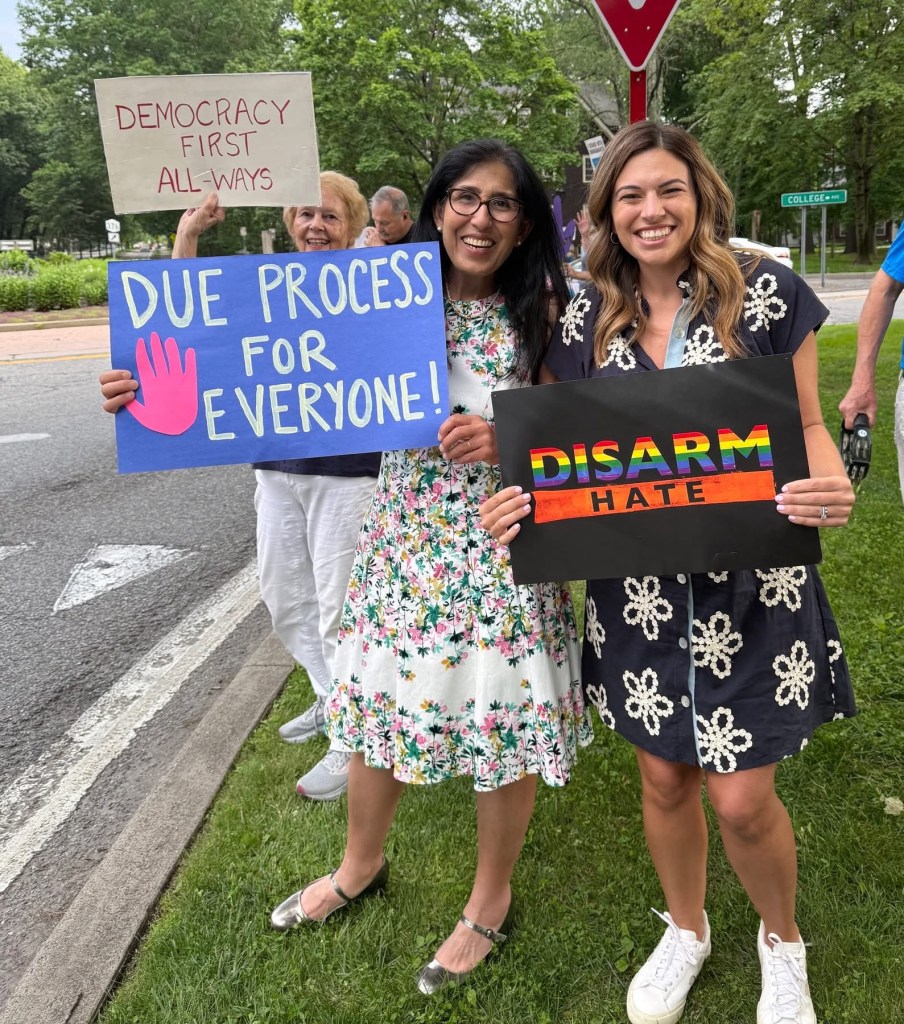
Which raises an unavoidable question: how can newly elected officials—and those seeking office—stand in public holding signs that read “Due Process for Everyone” and not see this? How can “everyone” exclude the assaulted, the bereaved, the traumatized? If due process truly belongs to all, why does it so often stop at the moment victims need it most—when accountability is finally pursued?

Victims deserve more than condolences and slogans. They deserve transparent explanations, lawful enforcement, and leaders willing to say that preventing future harm matters as much as protecting procedural rights. Due process, properly understood, runs the full arc of justice: before the crime, during enforcement, and after the verdict—applied to the harmed as surely as to the accused.

Until that balance is restored, victims will remain remembered briefly, mourned publicly, and forgotten institutionally. And that may be the greatest injustice of all.

When Local Government Fails, the Constitution Does Not

There are moments when a nation has to decide whether laws are real—or merely aspirational.

That moment has arrived in Minneapolis.

What is happening there is no longer protest in any meaningful civic sense. It is organized, sustained violence aimed at stopping the enforcement of federal law. When crowds attack federal officers, torch property, blockade neighborhoods, and dare authorities to intervene, the issue is no longer political disagreement. It is coercion by force.

And coercion by force is exactly what the Insurrection Act was designed to confront.

This isn’t about rhetoric. It isn’t about tone. And it certainly isn’t about optics. It’s about whether civil authority still governs American cities—or whether it yields when challenged hard enough.

Local leadership has not merely struggled. It has failed.

When mayors plead instead of enforce, when governors hesitate instead of restore order, and when police are overwhelmed or politically restrained into paralysis, authority doesn’t vanish. It transfers. That is not authoritarianism. That is constitutional design.

President Donald Trump is right to raise the Insurrection Act—and wrong to delay its use.

The Act is not a threat. It is not a stunt. It is a constitutional backstop for moments when local government can no longer or will no longer perform its most basic function: maintaining public order. History is clear on this point. The Insurrection Act has been invoked to enforce desegregation, to stop riots, and to reestablish lawful control when states abdicated responsibility.

It has never been about tyranny.

It has always been about preserving the Republic when it is under physical assault.

Let’s dispense with the talking points. Peaceful protest happens every day in America without federal troops in sight. What is happening now involves arson, intimidation, and direct attacks on agents of the federal government—particularly U.S. Immigration and Customs Enforcement—whose obligation is to enforce laws passed by Congress, not negotiate them with mobs.

At that point, this is no longer a local matter.

It becomes a national one.

The real danger is not invoking the Insurrection Act.

The real danger is signaling that it will never be used—no matter how severe the breakdown becomes.

That lesson would be catastrophic.

Because once violence is seen to work—once it becomes clear that sustained disorder can override law—every grievance learns the same tactic. Minneapolis doesn’t remain isolated. It becomes precedent.

A government that cannot protect its officers cannot protect its citizens.

A government that refuses to enforce its laws forfeits legitimacy.

And a republic that yields to mobs does not remain a republic for long.

Invoking the Insurrection Act is not about punishment.

It is about containment.

It is about restoration.

It is about reaffirming that the rule of law is not optional, negotiable, or subject to veto by fire.

Order is not oppression.

Law is not fascism.

And when local government fails, the Constitution does not.