Corrupt Judges Make The Other Ten Percent Look Bad

In its continuing efforts to expose what’s going on in NY State’s Family Court, the Families Civil Liberty Union continues with its summary of horrific tales of Family Court Judges.

LORI CURRIER WOODS (Supreme Court, Orange County): Woe betide any parent who questions or appeals this wellspring of rage. Woods’ weapon of choice is to threaten parents that she will send their children into foster care if they so much as whisper an objection to her. She makes snap decisions on who is the ‘targeted” parent, and who is ‘protected’, and then sticks to that decision, no matter what the concrete evidence.

Woods’ anger issues may stem from a tragedy in her family. Her son Zachary, a student at Penn State, died on May 6, 2014, when his car fell a hundred feet from an overpass. Since then she has told parents in her courtroom, “you should consider yourself lucky you even have your children.”

In the milestone case of Joe Picone v Frank Golio, which the FCLU has closely monitored, she made legal history by removing two children from the custody of the biological father (Golio) and giving it to his ex-boyfriend (Picone). She even ordered the five-year-old twins to be uprooted from their home and school in Florida to move to New York, and start their lives again under her nose. The biological dad, Golio, sought intervention from the Appellate Division, and successfully secured a record EIGHT STAYS on Woods’ successive temporary orders. Enraged, Woods set about to destroy Golio. She ordered the kids to come to her courthouse for a private ‘Lincoln hearing’, but when they expressed a wish to return to Florida and live with Mr Golio, Woods ignored their wishes and said that “the children do not know what they want.” Once she had secured a lifting of the stay by the Appellate Division (thanks to the Brooke decision issued by the NY Court of Appeals in August 2016), Woods retaliated brutally against Mr Golio. In the trial, she allowed Picone to cite the kids as legitimate testimony, but dismissed similar reports by Golio as hearsay. A whopping four years after the case came before her, Woods issued a 13- page Final Order of Custody, captioned RPF v FG, which, along with decimating Golio’s time with his children, reads as a vindictive, ad hominem character assassination of Golio. Emboldened by Woods’ support, Picone violated Mr Golio’s visitation and access rights. Golio complained to the court, but Woods neglected to step in, simply ignoring his violation and modification petitions, and stonewalling his entreaties to enforce her own order. Merciless, Woods then foisted a massive child support bill on Golio, way above what it should have been because she used his attorney bills as “imputed income”. These bills crippled Golio financially, and forced him to declare bankruptcy in 2018. Woods refused to downwardly modify the child support order, and then sought to have him jailed for contempt. Meantime, the kids’ lives are in turmoil.

Woods has her favored “experts”, whom she appoints at great expense to the families who come before her. Woods’ cronies include Marc Mednick, who receives tens of thousands from each family to conduct “forensic evaluations” of dubious quality.

A chorus of critics says that being in her courtroom is “traumatizing”, that “if there was ever a reason to vote it’s now get this loony off the bench. It’s insane what she gets away with.” Another parent writes: “Arrogant and rude. I appeared before this judge making a lawful citizen’s request and was made to feel like I was a criminal the entire time. I was not allowed to speak, and it was clear the judge had not reviewed the materials I submitted. My request was rejected in all of 3.5 minutes. I felt railroaded and disenfranchised, further impacting my trust in my government.”

Born in 1958, she is a lifelong Republican. Woods began her career in 1983 as an attorney in the California-based Law Offices of Mikin & Kohn. She then served as a deputy district attorney in Orange County, California, from 1984 to 1985. In 1985, she became an Orange County assistant district attorney. She then worked as an attorney for the law firm of Larking & Axelrod from 1988 to 1992. From 1997 to 2001, she was an attorney and law guardian for the Children’s Rights Society. She then became a councilperson for the Town of Monroe. Her own resume says she worked in these positions through 2005. She took the family court bench in 2006, and was re-elected in 2015 on a wholly inaccurate slogan of “Compassionate, Competent. Fair.” Unless removed, she will hold office until December 31, 2025.

DEMOCRATS NEED TO GO BACK TO COLLEGE

A large portion of the Democratic party’s present animosity toward the Electoral College is rooted in rank partisanship. Since they watched their supposed “blue wall” evaporate in the small hours of the 2016 presidential election, many Democrats have felt sufficient anger with the system to seek to remake it. This habit has by no means been limited to the Electoral College. Indeed, no sooner has the Democratic party lost control of an institution that it had assumed it would retain in perpetuity than that institution has been denounced as retrograde and unfair. In the past year alone, this impulse has led to calls for the abolition or reinvention of the Senate, the Supreme Court, and more.
Critics of the Electoral College bristle at the insistence that it prevents New York and California from imposing their will on the rest of the country. But the Electoral College guarantees that candidates who seek the only nationally elected office in America must attempt to appeal to as broad a geographic constituency as possible — large states and small, populous and rural — rather than retreating to their preferred pockets and running up the score. The alternative to this arrangement is not less political contention or a reduction in anger; it is more of both.
Impatient at the lack of progress that the #Resistance has made in pulling the wiring out of America’s constitutional engine, a handful of states have adopted the “National Popular Vote” plan, which binds their electors to cast their ballots for the candidate who wins a majority of votes nationwide. Until enough states have signed on to tip the balance past 270 — and, indeed, until the inevitable litigation has been concluded — adoption of the NPV will remain purely symbolic. Should it be put into action, however, it would achieve the remarkable feat of removing all of the benefits that the Electoral College provides while preventing the electors of each state from voting for the presidential candidate whom a majority in that state had picked. Who knew that the outsourcing craze would extend to democracy?
The U.S. Constitution is a complex document that, as Whitman might have put it, contains multitudes. At once, it boasts guarantees of democracy and protections against it; hosts an outline for national action, and a blueprint for localism; and serves as a vehicle for the majority, while including guarantees that the most significant decisions must be broadly agreed upon. The Electoral College is one of the many finely tuned institutions within the charter that have ensured stability and continuity in America for more than two centuries. To destroy it in a hail of platitudes, civic ignorance, and old-fashioned political pique would be a disastrous mistake.

Still Missing The Greatest Show on Earth

It began in 1871 as P. T. Barnum’s Grand Traveling Museum, Menagerie, Caravan & Hippodrome, back when Prussia was still a kingdom and Jesse James was robbing banks. It survived the Depression, two world wars and the new media of its time, including radio, film and television.

But on May 21, the world’s most historic circus, Ringling Brothers and Barnum & Bailey, shut down after failing to sufficiently dazzle the children of the smartphone age and to overcome the fierce opposition of the animal rights movement, which does not want to see animals in the circus.

With all that is happening in the world, I haven’t had time to think about this at length. I can remember looking forward to the circus as a kid in Manhattan at Madison Square Garden. There was a time that the circus would allow ticket holders who arrived an hour before show time to visit their ‘Freak Show’ which gave all who wanted to go a chance to see the performers up close. Now this meant being able to pull the bearded ladies beard; see the giant who would let you sit on his lap and, if you were lucky and your parents were so inclined, a chance to buy his replica finger ring that could fit around your forearm. In retrospect, this was part of the circus that should have shut down, although I don’t recall anyone being mean to the performers. It was exciting to be that close to the circus. Then there were the acts and the excitement of seeing the high wire acts. There was something magical when the Garden’s lights went down and the music went up and you were there with your parents. It never seemed that your folks were bored. Years later, I remember taking my own daughter and watching her being awed as I was. I’ll miss the circus. I can’t believe that there will be a generation of children who will never get the chance to experience a show where their parents could be kids themselves.

Superman….We Still Need Him

Truth, justice, selflessness. Superman meant all these things to me. To me and to any young boy Superman is more than a mere character in a Sunday strip from some long past decade. And more than just a blot of ink on a page. Because what is Superman?

One of his fellow compatriots described him as a man who “had many talents and gifts” and “one who would share them freely,” and stated merely that above all his super human abilities that we know his greatest intrinsic ability was his “power to discern what needed to be done and his unwavering courage in doing it, whatever the personal cost.”

Superman was never meant to be a special individual, but a different one. Superman was to be humble, reserved, and calm in the darkest moments and always restrain his full strength to keep himself form injuring even those that he fought against in the heat of battle.

The everyday ethics of people, influence the actions of others. Such ethics define the standards of modern culture. One would understand why a petty thief wouldn’t pause from perusing the contents of an elderly man’s pocket if he knew Superman could be watching. But, just maybe, that thief would recognize the heart of the noble Kryptonian. And perhaps if that thief were a boy he too would seek him out as a model for good.

Is it not often that we learn from example of others? Imagine the implications of it all. Great men appear in the presence of great events or great individuals. Great men rise to the occasion in times of struggle. Men like Winston Churchill rose to the challenge of leadership and represented the great maritime nation of England In WWII. Great mean like Martin Luther King Jr. made the decision to compromise his security, his reputation, and his own life to stand for a goal that meant his very being all because of predecessors of his message like Mohandas Gandhi, who in another age advocated the equal civil rights of those from any socio-economic origin. Humble men rose from humble beginnings like Abraham Lincoln who living apart from the destruction and despair of America’s Great Civil War spoke that “The world will little note, nor long remember what we say here, but it can never forget what they did here.” And even perhaps Ronald Regan who established himself in the face of Communism and Totalitarianism reflects that the world needs character and a focus of justice in the world.

There is an absence of clarity, of role models, civic leaders, and outstanding members of society to lead us through the darkness of the world. Especially today, in a world where pop culture and mainstream press focuses on telling people how ugly they are or what ethics they should infringe upon to make their lives just a little better.

I could wager without pause of thought to say that I’d give anything to see the Man of Steel with us: a civic figure, an embodiment of justice, integrity, and honor, a man that showed the world what is meant to be a hero. Because whether or not Superman need or need not exist in today’s world it is up to the people of the world to accept what doctrine he stood for.

Would the presence of a man, who’s wisdom and knowledge predicated the good nature of the human spirit, build for a better world?

Would we all feel just a little bit better knowing that our lives were watched over by an almost omnipotent individual?

Perhaps we all would. I know I would. And maybe now you too will know why the World needs a Superman.

The Horror of Family Court

Run a list of bad behavior. You can multiply it if no father is around. Higher chance of committing a crime. Higher chance of getting hooked on drugs. Higher chance of winding up poor. Higher chance of landing behind bars. Higher chance of depression. Higher chance of suicide. Higher chance of violent behavior.
And the worst of all, higher chance of doing the same thing somewhere down the road — leaving a family, or walking away from a marriage.
All because a man was plenty interested in having sex, and not the slightest bit interested in the consequences. But what about a Dad who wants to stay? Who wants to do the right thing and then runs into Family Court.
The words “prejudice” and “corruption” do not really convey what family courts are about. They are the linchpin of a massive political machine that thrives and grows by systematically destroying families. Within this machine individual judges are “no more than blind executors of the system’s own internal laws,” as Vaclav Havel has written of another kind of apparat, laws which are “far more powerful than the will of any individual.” What we have, in other words, is a system of bureaucratic terror, the kind of terror that has never before been seen in the United States. I have previously written on my own experiences in Family and Supreme Court in New York in front of the likes of Judge John Sweeny, whose bench practice reeks of conceit and arrogance or Support Magistrates like Rachelle Kaufman whose whole career proves that stupidity combined with arrogance and a huge ego will get you a long way in New York State’s judicial system.
Let’s consider another part of the problem that’s rarely addressed: a Family Court System that is out of control. From the Families Civil Liberties Union comes the following:
The countdown of NY’s worst judges marches on :
# 13 JUDITH D. WAKSBERG (Kings County Family Court): Waksberg’s actions have caused havoc to numerous families. No more so than what she is doing to a young boy, whom she continues to separate from her father, Lee Carda. In that case, she modified a prior order, from the atypically reasonable Judge Michael Katz, that had allowed the little boy unsupervised access to Mr Carda. Waksberg changed that to supervised visitation, without any hearing on the motion, and effectively endorsing mother’s alienating behavior. She then took no action when the mother failed to make the boy available for visitation, and turned a blind eye when she moved out of New York to Florida. What “Whack-job Waksberg” did do was order a torturous forensic evaluation, costing the parents $15,000, and forced the father to pay 75% of that. She then withheld the final report from the father and his attorney. And when the mother failed to bring the child to therapeutic visitation, she did nothing. In July 2018, the FCLU witnessed Waksberg completely ignore a contempt motion filed by Mr Carda after the mother had blocked all physical contact with the father and allowed him only 10 minutes of phone contact in eight months. Instead of ordering the mother to comply with the order and help rebuild her son’s relationship with her dad, Waksberg told the father to “work on [his] parenting skills”. A court observer was so appalled by this callousness that he called out that this was a “tragedy of justice.” Waksberg ordered one of her armed officers to remove the observer from the court. She then pressured the father to agree to a settlement agreement that would excuse all the mother’s violations and allow him “visitation” with the boy — in FOUR YEARS time. Those settlement negotiations took five hours, further enriching the three attorneys — Andrew Black (dad), Mahmoud Ramadan (mom’s attorney, who has not turned up to five scheduled hearings), and the corrupt Children’s Law Center’s Lauren McSwain (who has failed egregiously to protect the child’s welfare). Those attorneys churned billable time as they debated how many photos of the child the mother should send to the father — eventually agreeing to five photos per month. Waksberg signed off on this order, but took no steps to address the mother’s blatant contempt. Instead, she ordered a forensic evaluation with one of King’s County family court’s worst hacks, Sophie Michelakou, who has made hundreds of thousands of dollars from court appointments. Chances of justice or any improvement to the boy’s life: zero.
Terrified of publicity, Waksberg instructs her court officers to stop people coming into her courtroom, or just to throw them out. She also harasses journalists reporting on her actions. She is slovenly in her distribution of key items of evidence, such as forensic reports. Appointed by NYC Mayor Bill DiBlasio, Waksberg came to the family court bench in January 2017, having received no formal judicial training in family court matters.

Can’t We Just Get Along?

I had an exchange with a cousin of mine, yesterday, regarding one of my FB posts. Now this cousin is as smart as they come and is someone who has devouted his life to his community and his teaching profession. They don’t make ’em better than he and I’m blessed that we share the same grandfather.
Our brief exchange got me thinking about the state of things, now, in our country.
Most residents of Washington, DC; Manhattan; Marin County, Calif.; and Cambridge, Mass., didn’t know anyone who had voted for Donald Trump. West Virginians couldn’t have imagined someone casting a ballot for Hillary Clinton.
I’ve been interrogated by a loud neighbor who wanted to know if it was true that I voted for Trump. Before I had a chance to respond, those standing around started to distance themselves from me, and one young woman gave me a stare that seemed to say, “Even if you were the last male remaining alive on earth, I wouldn’t have dinner with you.” Now, I’ve been told that Im a great dinner companion, but it didn’t matter. They all wanted to unsee me.
There is a sense, today that partisan affiliation reflects more than just a voting preference. Rather, it says something about your character. And where you come down on Trump is increasingly a decisive factor in whether or not someone wants to associate with you.
The acrimony in politics has become so pervasive that 91 percent of voters said it was a serious problem in a Quinnipiac University poll released last month. There was strong consensus about who was at fault: 47 percent said they blame Trump more; 37 percent said Democrats.
I don’t know where we’ll go with this. I sometimes find myself re-reading the words of Abraham Lincoln who said, at the close of his First Inaugural Address:

We are not enemies, but friends. We must not be enemies. Though passion may have strained it must not break our bonds of affection. The mystic chords of memory, stretching from every battlefield and patriot grave to every living heart and hearthstone all over this broad land, will yet swell the chorus of the Union, when again touched, as surely they will be, by the better angels of our nature.

It’s Not Over Until The Democrats Say So – Here’s Why

If you wonder why the left has reacted so strongly to the Mueller report findings of no collusion, all you have to do is recognize that they need to continue the demonization of Trump as opposed to running on what their platform has morphed into.
Consider the following:
As political analyst Sean Trende has written:
That over the course of the past few years, Democrats and liberals have: booed the inclusion of God in their platform at the 2012 convention . . . endorsed a regulation that would allow transgendered students to use the bathroom and locker room corresponding to their identity; attempted to force small businesses to cover drugs they believe induce abortions; attempted to force nuns to provide contraceptive coverage; forced Brendan Eich to step down as chief executive officer of Mozilla due to his opposition to marriage equality; fined a small Christian bakery over $140,000 for refusing to bake a cake for a same-sex wedding; vigorously opposed a law in Indiana that would provide protections against similar regulations—despite having overwhelmingly supported similar laws when they protected Native American religious rights—and then scoured the Indiana countryside trying to find a business that would be affected by the law before settling upon a small pizza place in the middle of nowhere and harassing the owners. More recently they have embraced late term abortions.
Given the above, if you were a Demcrat running for office, wouldn’t it be easier to run on Mueller report dissatisfaction as opposed to running on a platform as I just outlined?

“Tell Your Mother I Want To See Her”

“Tell your mother that I want to see her”. These terrifying words, said by Sister Patrick to me in 8th grade still makes me break out in a cold sweat. All that afternoon, I tried to both figure out why this ‘request’ was being made and, more importantly, how to tell my mother. Over dinner, that night, I blurted out the summons. My mother looked at me, long and hard, and delivered the only thing a mom could say, “What did you do, now?”. “Nothing, Mom, I don’t know”, as tears began to flow. The next afternoon, taking public transportation, my mom went to the convent. She later described her ringing the side door bell and, after waiting for what seemed like an eternity, being ushered in for her meeting. “Thank you for coming, Mrs. Kowalski, I’ll get right to the point, we’re worried about Edward getting into a Catholic High School, he’s distracted and not doing well in mathematics”, she said. “It would be DEVASTATING, for Edward, we feel, should he not get in”. I don’t know what my mother said to Sister Patrick that afternoon. I do know that she was quiet when she arrived back home. ‘What did Sister Patrick want, Mom?”. ‘Nothing, it was a Mother’s Club, issue, Eddie”. Now, my cousin, Kevin was a grade school teacher at a Catholic School in Harlem and he ran a successful Co-op preparation program for his students. I was drafted. For the next 8 Saturdays I was part of his program. A white kid in Spanish Harlem. After a while, I was accepted by the other kids who were all trying to achieve the same goal – get into a Catholic High School. When I took the actual examination, I did just fine. Now, the post script of this story is that when I did enter my Freshman year, at a Catholic high school, I was fortunate to finish that year academically ranked in first place. I remember receiving the school’s General Excellence medal and bringing it home. My mother looked at it and asked if she could ‘borrow’ it. The next thing I remember was her putting her coat on and saying that she’d be back soon. When she returned home, she told me that she took the long ride into Manhattan arriving at the same bell on the convent door but this time, it was she that wanted to see Sister Patrick. ‘Just wanted to show this to you, Sister’, was all she later told me that she said. She never told me what the good Sister said. I transferred to Xavier the next year. Sister Patrick also told me that I’d ‘never get in’ to that school.

I guess the meaning of this story is knowing what a family is about. It’s not just about love. It’s knowing that your family will be there watching out for you. Nothing else will give you that. Not money. Not fame. Not work. Thanks, Mom. PS, I still can’t multiply a fraction………

I’ve Never Had Any Friends Like The Ones I Had When I Was 12

I was going through old newspapers columns today and I pulled one out that I’ve been saving for a while. It was page 1 of both the Detroit Free Press and USA Today. The headline in USA Today read:

“Study: 25 percent of Americans have no one to confide in”

Hmm.

According to the American Sociological Review, over the last two decades, the average American went from having three people to whom they could confide important matters to just two. And one in four Americans had no one to confide in at all.

No one to confide in.

Is there a lonelier sentence than that?

I began thinking about this problem alongside what happened to our summers. As you might expect, the sociologists blamed these study results on the typical suspects: too many people living in the suburbs and working in the city. Too many people with headphones over their ears. Too many people imprisoned before a TV set or computer screen or a smart phone.

But you can’t blame machines for everything. We’re the ones choosing to dive inside them.

I think there’s more to it. I think it starts earlier, like back in high school. After all, very few adults make their “best” or “lifelong” friends when they are in their 30s. Our closest friends are usually people we’ve known much longer, often since we were kids. Stephen King, in one of his most memorable stories, “The Body” (which later became the movie “Stand By Me”), wrote what I always considered the best single sum-up of this. It was the last line of his tale:

“I never had any friends later on like the ones I had when I was 12.”

There’s a reason for that.

Think about it. When do you establish the strongest bonds of friendship? Not when you’re moving a million miles per hour. You do it when you’re hanging around, riding the game bus, lying in the grass, kicking a can, sleeping over in a friend’s basement. When you’re going slow enough to listen to your friends’ words, to look them in the eye, to share those uncontrollable fits of laughter.

Friendships might be photographed at parties or celebrations, but they are forged in much quieter moments. The guys I knew when I was 13 are still guys I can talk to today. The guys I shared midnight pizza with in in high school are still men I can confide in if I need to.

The point is, to have a trusting friendship — one that provides you with confidants — you have to give it time to breathe. Not to compete. Not to text-message. To breathe, to hang out, to smile, to share time, even boring time.

So maybe when folks who have kids today are deciding what their kids should “accomplish” this summer, they should consider the value of slow, meandering friendships with kids who live nearby. True, such things don’t give you diplomas or trophies when the summer ends.

They give you a lot more. Right, Louie? Right, Tommy?

More Than A Subway Station

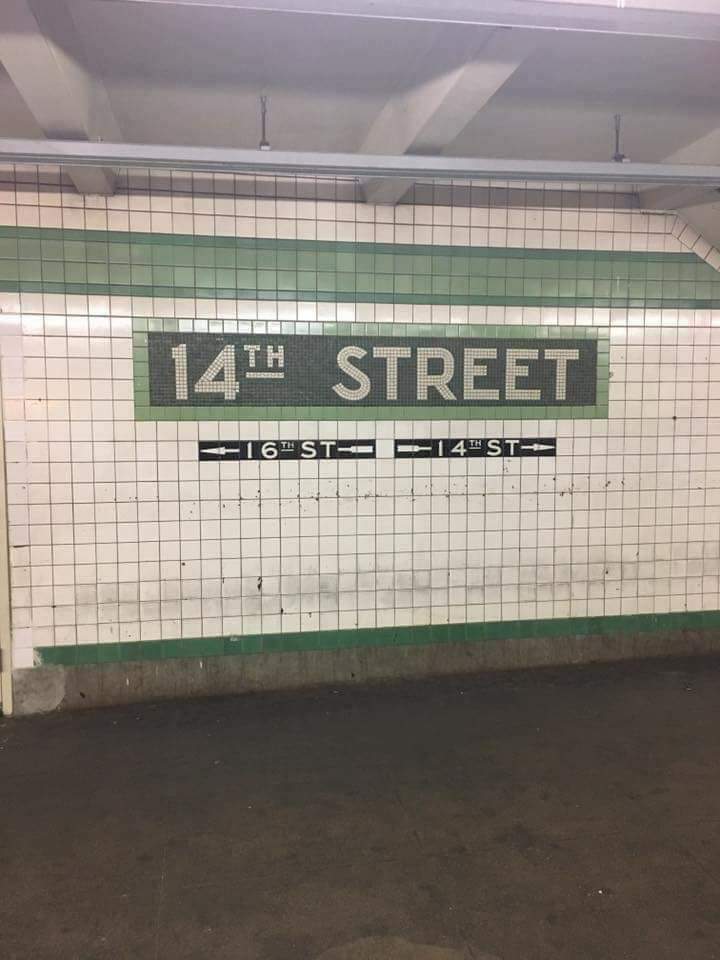
A friend of mine posted this picture of the subway stop that we who attended Xavier High School used.
When I saw the photo, I was struck, immediately, by the flood of memories I had in remembering how many times I stood at that spot waiting for my train. Depending on the time of day that I was there, the station could be stangely quiet; almost catherdral like in it’s silence. It was at this station that many thoughts about my day at Xavier would run through my mind. It allowed me the time look back over the day, the week, the year, while I was trying to figure out where I had come from and where I was going to; for sifting through the things I had done and the things I had left undone; for a clue to who I was and who, for better or worse, I was becoming.
I remember being there, after a dance, late at night and being with a girl who lived in Woodside and she wanted to ride home on the subway with me! I never wanted the subway to arrive!
Today, I sometimes wish for a place to have these long thoughts.
Seeing this picture reminded me that there are, indeed, some locations where the past lives on as a part of the present, where the dead are alive again, where we are most alive ourselves and to reflect on where our journeys have brought us. A place, unchanged, where, if we close our eyes, with patience, with charity, with quietness of heart, we can remember consciously the lives we have lived.
And you guys thought it was just a picture of a subway stop!

Let’s Call An Uber

So, the other night, I found myself with a group of friends in Manhattan. Having just seen Livingston Taylor at the City Winery (a great show, by the way) we all decided to go to a restaurant that I used to frequent when I was a steady commuter to the city. “Let’s call an Uber”, one of my friends said and before I knew it, Kelly whipped out her cell phone and said “Our driver’s on the way”.
I am from the generation whose mothers preached, “Don’t ever get in a car with a stranger!” So right from the start, Uber had me nervous.
Let’s see. You download an app onto your phone. You type in where you are. A driver you never met before suddenly appears, knows your name and has a loose connection to your credit card. The vehicle may be a Lincoln, an SUV or a 6-year-old Kia, the same car the driver just took to the grocery store, or, for all you know, a drug pickup.
You get in.
My generation is more afraid. Actually terrified. And, perhaps, in the end, more practical.
We are also dinosaurs.
So while young people, like my colleague Kelly and her husband Jeff gleefully hail Uber cars on their way out of bars, and cities everywhere argue over whether Uber unfairly competes, avoids taxes or influences legislation, baby boomers are still mumbling, “Wait, you just get IN the car? And the driver could be ANYONE?”
The long and the short of this story is that we got to our destination just fine and Manny, our Uber driver couldn’t have been nicer. I guess I just needed to shake my head and return to my planet, waiting for yellow cars with black checkers to take me to restaurants or train stations or airports.
I know. A dinosaur. But look at how long they lived.