The Forgotten Side of Due Process: Victims

“Due process” is one of the most revered principles in American law. It exists to restrain government power, ensure fairness, and protect against arbitrary punishment. It is essential. But somewhere along the way, due process has been narrowed—spoken of almost exclusively in terms of the accused—while the people who suffer the harm have been pushed to the margins of the conversation.

Victims have become the forgotten side of due process.

When violent crime is committed, the law immediately mobilizes around the rights of the defendant: procedural safeguards, evidentiary standards, constitutional protections. All of this is proper. What goes unspoken is that victims, too, are owed process—protection before harm, accountability after it, and truth throughout. Justice is not complete simply because procedures were followed once someone was hurt. It must also ask whether the system failed while there was still time to prevent the harm.

That failure becomes impossible to ignore when ICE agents attempt to arrest individuals who have already victimized people—and are met by protests opposing the arrest itself. Whatever one’s views on immigration policy, opposing the lawful apprehension of someone who has already harmed others sends a stark message to victims: your suffering is secondary to the politics of the moment.

This is not a debate about mass roundups or blanket suspicion. It is about known offenders. Missed enforcement opportunities, ignored detainers, and refusals to cooperate are often followed by public outrage—not at the crime, but at the attempt to hold the perpetrator accountable. When enforcement finally acts and is denounced for doing so, the system completes a cruel inversion: the offender is centered again, and the victim disappears.

Due process is not meant to be a one-sided shield; it is meant to balance rights and responsibilities. Protesting the arrest of someone who has already caused harm confuses compassion with consequence-free governance. Compassion that refuses to recognize victims is not justice—it is abdication.

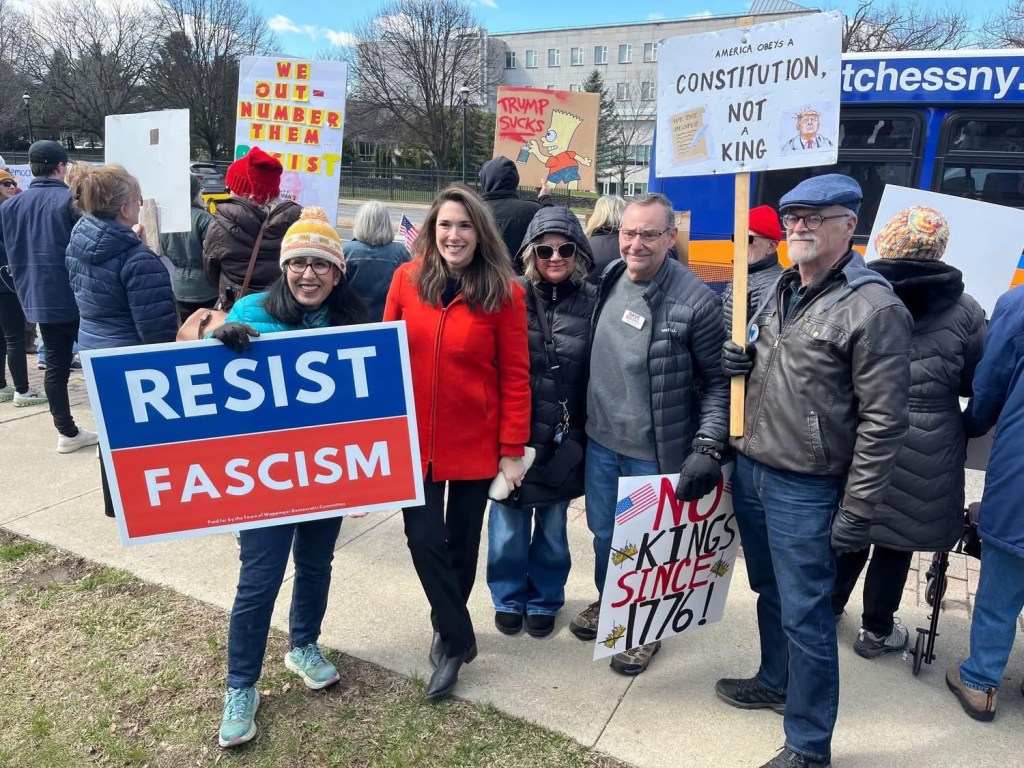
Which raises an unavoidable question: how can newly elected officials—and those seeking office—stand in public holding signs that read “Due Process for Everyone” and not see this? How can “everyone” exclude the assaulted, the bereaved, the traumatized? If due process truly belongs to all, why does it so often stop at the moment victims need it most—when accountability is finally pursued?

Victims deserve more than condolences and slogans. They deserve transparent explanations, lawful enforcement, and leaders willing to say that preventing future harm matters as much as protecting procedural rights. Due process, properly understood, runs the full arc of justice: before the crime, during enforcement, and after the verdict—applied to the harmed as surely as to the accused.

Until that balance is restored, victims will remain remembered briefly, mourned publicly, and forgotten institutionally. And that may be the greatest injustice of all.

When Local Government Fails, the Constitution Does Not

There are moments when a nation has to decide whether laws are real—or merely aspirational.

That moment has arrived in Minneapolis.

What is happening there is no longer protest in any meaningful civic sense. It is organized, sustained violence aimed at stopping the enforcement of federal law. When crowds attack federal officers, torch property, blockade neighborhoods, and dare authorities to intervene, the issue is no longer political disagreement. It is coercion by force.

And coercion by force is exactly what the Insurrection Act was designed to confront.

This isn’t about rhetoric. It isn’t about tone. And it certainly isn’t about optics. It’s about whether civil authority still governs American cities—or whether it yields when challenged hard enough.

Local leadership has not merely struggled. It has failed.

When mayors plead instead of enforce, when governors hesitate instead of restore order, and when police are overwhelmed or politically restrained into paralysis, authority doesn’t vanish. It transfers. That is not authoritarianism. That is constitutional design.

President Donald Trump is right to raise the Insurrection Act—and wrong to delay its use.

The Act is not a threat. It is not a stunt. It is a constitutional backstop for moments when local government can no longer or will no longer perform its most basic function: maintaining public order. History is clear on this point. The Insurrection Act has been invoked to enforce desegregation, to stop riots, and to reestablish lawful control when states abdicated responsibility.

It has never been about tyranny.

It has always been about preserving the Republic when it is under physical assault.

Let’s dispense with the talking points. Peaceful protest happens every day in America without federal troops in sight. What is happening now involves arson, intimidation, and direct attacks on agents of the federal government—particularly U.S. Immigration and Customs Enforcement—whose obligation is to enforce laws passed by Congress, not negotiate them with mobs.

At that point, this is no longer a local matter.

It becomes a national one.

The real danger is not invoking the Insurrection Act.

The real danger is signaling that it will never be used—no matter how severe the breakdown becomes.

That lesson would be catastrophic.

Because once violence is seen to work—once it becomes clear that sustained disorder can override law—every grievance learns the same tactic. Minneapolis doesn’t remain isolated. It becomes precedent.

A government that cannot protect its officers cannot protect its citizens.

A government that refuses to enforce its laws forfeits legitimacy.

And a republic that yields to mobs does not remain a republic for long.

Invoking the Insurrection Act is not about punishment.

It is about containment.

It is about restoration.

It is about reaffirming that the rule of law is not optional, negotiable, or subject to veto by fire.

Order is not oppression.

Law is not fascism.

And when local government fails, the Constitution does not.

The ICE Uproar and the Anatomy of Manufactured Outrage

Newly Elected Dutchess County Legislator Emma Arnoff

A Valley Viewpoint Narrative

There’s a familiar rhythm to modern outrage.

A federal action occurs. A partial version of events spreads faster than the facts. Elected officials rush to microphones. Protest signs appear overnight. And before the public has even learned what actually happened, the verdict is already rendered.

What we are watching unfold around ICE right now fits that pattern almost perfectly.

Strip away the noise and the hashtags, and a harder question remains: how much of this outrage is organic — and how much is curated?

Because outrage, like everything else in modern politics, has become a product.

Protests don’t materialize in a vacuum. Messaging doesn’t synchronize itself. Talking points don’t magically align across activist groups, social media, and elected officials within hours unless there is structure behind it. That doesn’t mean everyone involved is acting in bad faith — but it does mean spontaneity is often overstated, and intent is rarely examined.

And that’s the real problem.

When federal law enforcement is involved in a violent incident, scrutiny is not just appropriate — it’s essential. No badge confers immunity from accountability. But scrutiny requires facts, timelines, and restraint. What we’re seeing instead is something else entirely: pre-loaded conclusions and selective framing designed to inflame rather than inform.

ICE is not a philosophical concept. It is an agency tasked — rightly or wrongly — with enforcing laws passed by Congress and signed by presidents of both parties. You can oppose those laws. You can argue they are unjust, outdated, or inhumane. But when the argument shifts from the law is wrong to the law has no legitimacy, we cross a dangerous line.

Because once enforcement itself is declared illegitimate, any resistance becomes justified — including interference, obstruction, and eventually violence.

That’s not a slippery-slope argument. It’s history.

And here in Dutchess County, we see a local version of this same dynamic playing out.

Newly elected officials — some only weeks removed from taking their oath — now appear behind protest signs and slogans that reveal a troubling truth: a fundamental ignorance of the very laws they just swore to uphold. Whatever one’s personal views on immigration enforcement, public officials do not get to selectively disregard the rule of law the moment it becomes politically inconvenient.

An oath is not symbolic. It is not conditional. And it is not overridden by a cardboard sign or a trending chant.

What’s especially troubling is the role of political leadership in moments like this. Leaders are supposed to slow things down, not accelerate chaos. They are supposed to demand investigations, not assign blame before evidence exists. They are supposed to distinguish between peaceful protest and incitement — not blur the two for political advantage.

Instead, we’re seeing a familiar abdication: outrage outsourced to the streets, accountability deferred, and complexity reduced to slogans.

This is where the public gets misled — not because concerns are illegitimate, but because they are weaponized.

You don’t have to support ICE to recognize this. You don’t have to endorse aggressive enforcement to notice the choreography. And you don’t have to trust the federal government to question narratives that demand instant outrage while discouraging basic questions.

The Valley Viewpoint has always held this line:

Truth before team.
Law before emotion.
Facts before hashtags.

If ICE agents acted improperly, investigate them — fully and transparently. If local officials inflamed tensions irresponsibly, hold them to account as well. If activist groups are intentionally escalating conflict to force political outcomes, that deserves sunlight, not silence.

Because the moment we accept that outrage itself is evidence — that feelings replace facts — we lose something far more important than an argument.

We lose the rule of law.

And once that’s gone, no sign, no chant, and no cause — however righteous — will be enough to bring it back.

From Two Categories to Thirty-One: How NYC Redefined Gender in Law

There was a time—not long ago—when sex was understood in law and daily life as binary: male and female. That clarity no longer exists, at least not in New York City.

In 2019, under Mayor Bill de Blasio, the New York City Commission on Human Rights released official guidance recognizing 31 distinct gender identities, all protected under the city’s anti-discrimination laws. Businesses were put on notice: failure to recognize or properly address someone by their self-identified gender or preferred pronouns could result in fines of up to $250,000.

The Commission framed the policy as a matter of dignity and respect. In its own words, New York City law prohibits discrimination based on “gender identity and gender expression” in employment, housing, and public accommodations. Gender identity, the Commission explained, is an individual’s “internal, deeply-held sense” of being male, female, or “something else entirely.”

To guide compliance, the city published an official list of 31 gender identity terms, including:

Bi-Gendered Cross-Dresser Drag-King Drag-Queen Femme Queen Female-to-Male FTM Gender Bender Genderqueer Male-to-Female MTF Non-Op Hijra Pangender Transsexual / Transexual Trans Person Woman Man Butch Two-Spirit Trans Agender Third Sex Gender Fluid Non-Binary Transgender Androgyne Gender-Gifted Femme Person of Transgender Experience Androgynous Gender Bender

Unlike traditional sex-based classifications, these identities require no documentation, medical transition, or legal verification. Individuals may access bathrooms or locker rooms based solely on self-identification. When uncertainty arises, the Commission advises: ask politely, apologize if you make a mistake, and move on.

This is not merely a cultural shift—it is a legal mandate, enforced with significant penalties. What was once a private matter of self-understanding has become a regulated public obligation, with compliance expected from employers, landlords, educators, and ordinary citizens alike.

I understand the stated goal: preventing harassment and discrimination. But I also recognize the unease this creates for many people who feel the ground beneath shared language, norms, and legal clarity has shifted faster than public consensus.

I’m not claiming malice.

I’m not denying anyone’s humanity.

But I am acknowledging something simpler—and harder to dismiss:

I am officially living in a world I no longer recognize.

Kathy Hochul’s State of the State: A Campaign Speech Disguised as Leadership

A Valley Viewpoint Narrative

There was a time when the State of the State was meant to do exactly that—describe the condition of New York. Not the polling. Not the campaign strategy. Not the governor’s re-election roadmap.
This year’s address from Kathy Hochul felt less like an accounting of where New York stands and more like a carefully stage-managed plea: please re-elect me.

The speech was long on applause lines and short on honesty.
We heard the familiar election-year greatest hits: affordability, child care, housing, “working families.” All worthy topics. All real problems. But problems don’t get solved by naming them—they get solved by grappling with tradeoffs, costs, and consequences. That part was conspicuously absent.

There was no serious reckoning with a state budget that continues to balloon. No meaningful discussion of Medicaid growth that threatens to crowd out everything else. No ownership of public safety policies that New Yorkers—especially those outside the Albany bubble—experience not as theory, but as daily reality. When leadership avoids the hard conversations, it isn’t prudence. It’s evasion.
The tone mattered, too. This was a speech designed to offend no one, challenge no one, and reassure everyone just enough to hold a fragile coalition together for one more election cycle. It was poll-tested, consultant-approved, and emotionally safe.
Which is precisely the problem.

New York doesn’t need safety right now. It needs seriousness.
The State of the State should be the moment when a governor levels with the public—about what’s working, what’s failing, and what difficult choices lie ahead. Instead, New Yorkers were offered a glossy brochure of intentions without a blueprint for execution.
That may work as a campaign strategy. It may even work politically.
But it doesn’t work as leadership.
And for a state facing affordability pressures, out-migration, workforce shortages, strained local governments, and declining trust in institutions, the absence of candor is itself a policy choice—one that says maintaining power matters more than confronting reality.

What a Real State of the State Should Have Said

A real State of the State wouldn’t begin with applause lines. It would begin with truth.

It would acknowledge that New York is at an inflection point—not because of partisan talking points, but because the math no longer works the way it used to. A serious address would have told New Yorkers plainly that state spending has grown faster than population, faster than inflation, and faster than the private economy that ultimately funds it. It would have admitted that this trajectory is unsustainable without either reform or consequences.

A real speech would have confronted Medicaid head-on—not as a slogan, but as the single largest pressure point in the state budget. It would have explained how costs grew, why oversight matters, and what reforms are on the table to preserve care without bankrupting the system. Leadership isn’t promising everything to everyone—it’s explaining what must change to keep promises viable.
On public safety, a real State of the State would have dropped the abstractions. It would have acknowledged that laws passed with good intentions produced real-world effects—on police staffing, court backlogs, victim confidence, and quality of life. It would have said clearly: when policies don’t work as intended, we fix them. No defensiveness. No denial.

On housing and affordability, a serious address would have admitted that state mandates alone don’t build homes—and that local resistance, regulatory drag, and infrastructure constraints are part of the problem. It would have spoken honestly about tradeoffs: density versus character, speed versus process, urgency versus ideology.
And perhaps most importantly, a real State of the State would have respected New Yorkers enough to tell them what cannot be done.
It would have said: we cannot lower taxes, expand services, grow spending, avoid reform, and still expect different results. Choices must be made. Priorities must be set. Some programs will need to change so others can survive.

That kind of speech wouldn’t poll well. It wouldn’t generate viral clips or easy applause.

But it would do something far more valuable: rebuild trust by treating citizens like adults instead of an audience.
Because the true state of the state isn’t found in campaign-tested optimism. It’s found in whether leaders are willing to say what’s hard—not just what’s safe.

And until that happens, New Yorkers will keep hearing speeches about where we wish we were—while living every day in the widening gap between rhetoric and reality.

Little v. Hecox — What the Case Is, and how the Supreme Court Might Decide It

Before Little v. Hecox becomes shorthand for something larger, it’s worth grounding it in what the case actually asks the Supreme Court to decide.

At its core, Little v. Hecox challenges Idaho’s “Fairness in Women’s Sports Act,” a law that restricts participation in women’s and girls’ school sports to athletes designated female at birth. The state argues the law is necessary to preserve competitive fairness and the original purpose of women’s athletics under Title IX. The challengers—led by Lindsay Hecox, a transgender woman—argue the law violates the Equal Protection Clause by imposing a categorical exclusion based on transgender status, without individualized assessment or evidence of harm.

Lower courts blocked the law, concluding it discriminated on the basis of sex and transgender identity. Idaho appealed, asking the Supreme Court a narrower—but heavier—question: does the Constitution prohibit states from drawing sex-based eligibility rules in athletics, even when those rules are designed to protect competitive opportunity?

That’s the legal frame. Everything else is interpretation.

And what came through most clearly during oral argument—especially in the questioning of Samuel Alito—was not a desire to resolve the cultural debate, but a reluctance to absorb it.

Alito’s questions weren’t about identity. They were about aftermath. If Idaho’s law falls, what replaces it? Who decides eligibility going forward—judges, school boards, doctors? Must every classification give way to individualized determinations? And does the Constitution really require courts to supervise the mechanics of competitive sports?

Those questions reveal the Court’s deeper concern: not whether the issue is difficult, but whether it belongs there at all.

The justices appear poised to say this: when society has not reached consensus, the Constitution does not automatically transfer decision-making authority from legislatures to courts. Lawmakers draw imperfect lines. Courts review them—but do not rewrite them simply because the terrain is contested or emotionally charged.

That doesn’t mean the challengers’ concerns are insignificant. They aren’t. Exclusion has real consequences. Dignity matters. So does fairness. But so do institutional limits. And this Court is signaling—plainly—that it does not want to become the standing referee for every unresolved cultural conflict.

If Idaho prevails, it won’t be because the Court declared transgender people undeserving of protection. It will be because a majority concluded that the Constitution does not require judges to manage athletic eligibility, calibrate hormone thresholds, or replace legislatures as policy-makers in areas where law, biology, and social values collide.

That distinction matters.

Because today it’s sports. Tomorrow it’s something else.

The real takeaway from Little v. Hecox isn’t who wins or loses. It’s where the fight goes next: back to statehouses, back to voters, back to public debate—where compromise is messy, progress is uneven, and accountability is democratic rather than judicial.

Courts can strike laws down. They can uphold them.

But they can’t settle culture.

And this Court may be saying exactly that.

When Local Races Become National Therapy Sessions

There’s a moment in every campaign announcement where you learn what a candidate really thinks the job is.

In Dave Siegal’s announcement to run again for the District 3 seat on the Dutchess County Legislature, that moment comes quickly.

Siegal is not new to local politics. He is a familiar figure in Democratic circles in LaGrange and across Dutchess County—a consistent presence at rallies, protests, and party events. He is engaged, vocal, and ideologically committed. Last fall, he came within 61 votes of unseating the Republican incumbent in District 3.

That margin matters. In local politics, losses that narrow aren’t failures—they’re feedback. They’re an invitation to reassess, recalibrate, and ask a simple question: what did the voters in the middle need to hear that they didn’t?

What follows in Siegal’s announcement, however, is not that reflection.

Instead, the catalyst for his rematch campaign isn’t a local issue in LaGrange, a vote taken by the Republican legislator he hopes to defeat, or a county policy that needs changing. It’s an ICE protest in Poughkeepsie—and a broader condemnation of the federal administration.

That choice is telling.

County legislators don’t set immigration law. They don’t direct ICE. They don’t control border enforcement, detention policy, or federal priorities. Those decisions are made in Washington, not on Market Street in Poughkeepsie.

Yet Siegal frames his decision to run again for a county seat as a response to national politics, arguing that the way forward is to “elect every single Democrat we can at every level of government.”

That argument may resonate with activists. But District 3 is not decided by activists alone.

Siegal didn’t lose to a Democrat. He lost—by a handful of votes—to a Republican. Which means the voters who decided the race were not looking for party-line purity. They were looking for judgment, priorities, and reassurance that their county representative would focus on the practical business of local government.

When a rematch announcement centers ICE protests and labels national opponents as “fascist,” it raises an unavoidable question for those swing voters:

Is this campaign about serving LaGrange—or about fighting Washington by proxy?

Calling for blanket Democratic victories “at every level” avoids the harder work of explaining why the Republican incumbent in District 3 has failed locally, or what Siegal would do differently in office—on taxes, infrastructure, county services, or cost-of-living pressures that affect residents regardless of party.

This is the missed opportunity.

A candidate who came within 61 votes could have said: Here’s what I learned. Here’s where I didn’t connect. Here’s how I will better represent District 3 next time.

Instead, Siegal nationalizes a local rematch and turns a county legislative race into a referendum on federal politics.

That may energize the Democratic base. But base voters alone don’t flip Republican-held seats—especially in suburban districts like LaGrange.

Local leadership isn’t about how loudly you oppose national figures. It’s about how clearly you understand the limits and responsibilities of the office you’re seeking—and how convincingly you can show voters that you’re running for them, not just against someone else.

In a race decided by 61 votes, that distinction isn’t theoretical.

It’s everything.

An Open Letter to Legislator Emma Arnoff

Dear Legislator Arnoff,

I am writing to you as a constituent, and as someone who takes civic language—and civic responsibility—seriously.

The phrase on the sign you held, “with liberty and justice for all,” is among the most powerful words in our national life. It is aspirational, moral, and unifying. But it is also demanding. It asks more of us than good intentions and public demonstrations. It asks for balance, restraint, and fidelity to the rule of law.

That is where I believe you are wrong.

Liberty and justice are not achieved by selectively rejecting glaws we find uncomfortable. They are achieved by applying the law evenly, transparently, and humanely—especially when doing so is politically difficult.

Immigration and Customs Enforcement is not an extralegal force. It is a federal agency created by Congress, funded by Congress, and governed by statute and court oversight. Like any government institution, it can and should be scrutinized, reformed, and held accountable where it fails. But opposing lawful enforcement itself while invoking “justice” creates a contradiction that cannot be resolved by slogans.

Justice does not mean the absence of enforcement.

Liberty does not mean the absence of borders.

Compassion does not require the abandonment of law.

As an elected official, you swore an oath to uphold the law. That oath does not contain exceptions for laws that are unpopular or politically fraught. When legislators publicly align themselves with movements that portray enforcement as inherently illegitimate, they risk undermining public trust in lawful institutions without offering a credible alternative that preserves order, safety, and fairness.

There is also an uncomfortable inconsistency here. Government officials cannot simultaneously claim authority under the law while signaling resistance to its execution. Advocacy has its place—but governance requires responsibility. To blur that line is not moral clarity; it is abdication.

A serious immigration conversation requires honesty:

Honesty that a nation without enforceable laws does not remain a nation. Honesty that selective enforcement is itself an injustice. Honesty that rhetoric does not substitute for policy.

If “liberty and justice for all” is to be more than a chant, it must include:

Legal immigrants who followed the rules Citizens who expect laws to be enforced fairly Communities that depend on predictable order And those accused of violations, who deserve due process—not exemption

You may believe your stance represents moral courage. I believe moral courage also includes defending the principle that laws apply evenly, even when that position draws criticism.

This disagreement is not rooted in cruelty.

It is rooted in constitutional fidelity.

And that distinction matters—especially from those entrusted with public power.

Respectfully,

Ed Kowalski

Heaven Was Already Here

A Valley Viewpoint Narrative

What changes when you stop long enough to notice the life you’re already living.
Have you ever lived through the best days of your life without realizing they were happening?
Is Heaven somewhere you go—or something you learn to notice? I’ve come to believe that Heaven isn’t a destination at all. It’s attention. And the difference between a living hell and a living Heaven often has very little to do with circumstance and everything to do with whether we stop long enough to see what’s right in front of us.
For a long time, my life felt like a quiet kind of hell. I was always behind—behind on my writing, behind with my family, behind with friends, behind with my kid. Always chasing the next thing. Always certain that fulfillment lived just one step ahead. It wasn’t that I wanted more out of life. It was that I never stopped long enough to recognize what I already had.
So yes, I believe in Heaven on Earth. And I believe it’s found anywhere you’re willing to look for it.
Here’s where I found mine.
I found Heaven years ago, dropping my daughter off at school. Sometimes we’d stop for breakfast—just the two of us—talking about her world and mine. We shared music, made up songs, talked about values and nonsense in equal measure. Those ordinary mornings were sacred. Picking her up was just as good. I only wish I had done it more often.
I found Heaven in friendships that began with my Xavier High School classmates and somehow survived time. There’s nothing you can hide from someone who’s known you since you were thirteen. Fourteen. Fifteen. Sixteen. Seventeen. People call those years “just adolescence,” as if they’re something you endure on the way to real life. But sometimes your whole life happens right there—and everything that follows is the same story, told again with different characters. Pain. Loss. Love. Gratitude. And what we eventually call wisdom. If my life ended tomorrow, I’d know I had already lived deeply. That’s Heaven.
I found Heaven in the Jesuit teachers who shaped me. The teachers of my life quite literally saved my life—sending me out prepared for whatever it was I was meant to become. Sure, there were mediocre ones, even a few bad ones, but never one who didn’t care. They gave their lives to students like me. They lit a path and let me walk it with joy.
I found Heaven in finding my voice. What are the words you do not yet have? What are the quiet tyrannies you swallow day after day, until silence itself makes you sick? Finding your voice—claiming your truth—is an act of justice. And justice, when it’s honest, feels like Heaven.
I found Heaven in the family that raised me. They taught me that how something is given often matters more than the thing itself. Heaven, for me, lived in bungalows in Rockaway, in Manhattan and Bronx tenements, and in Sandy Hook, New Jersey. It lived wherever love was present, even when circumstances were modest.
I found Heaven in learning humility—slowly and imperfectly. As a younger man, I believed everything I had achieved was entirely my own doing. No parents. No aunts or uncles. No one else. That illusion doesn’t survive adulthood. Everything I have was given. I was never alone. I was never lacking. I have always had what I needed—and I am profoundly privileged.
Grace has shaped my life, and gratitude is the only honest response. If maturity asks for humility, then middle age asks for generosity. My parents, grandparents, aunts, and uncles lived their lives for me. I try to honor them by showing up for others—by helping, by being kind, by paying forward what I was given.
So thank you: Mom, Dad, Nagh, Sissy, John, Uncle Jimmy, Aunt Dottie, Elsie, Georgie, Mary and Jack, Raymie and Liz.
I found Heaven watching the little girl I once took to breakfast before kindergarten graduate with honors from Boston College—and then earn her MBA from UConn, ranked number one.
I found Heaven over the course of a career that allowed me to help friends find work, and in the laughter shared with colleagues past and present.
I found Heaven in the simple truth that the most meaningful part of working alongside the law is stopping people from pushing others around. And yes—once, memorably—I even found Heaven watching an opposing lawyer sanctioned for the sin of pure arrogance.
And finally, I found Heaven in trying to be braver with my talents and more forgiving of my flaws.
Acceptance and sadness can coexist. Sadness is inevitable—we’re human. Pretending otherwise only deepens the wound. But I accept that life is finite. I accept that our time comes sooner than we expect. And I accept that Heaven is already here.
All I’m saying is this: you don’t have to search very hard for something you’re already standing inside.

Why Uncontested Elections Should Worry Everyone

When No One Shows Up, the Status Quo Wins

A Conservative Look at the Unchallenged Record of Didi Barrett

For more than a decade, Assemblymember Didi Barrett has represented the Hudson Valley in Albany. This election cycle, she faces no announced Republican challenger.

That fact alone should concern voters—regardless of party.

Because when elections lack competition, accountability weakens. And in New York, where one-party control dominates the Legislature, the absence of a challenger doesn’t signal success. It signals entrenchment.

An Unchallenged Record Doesn’t Mean an Untested One

Barrett’s record is clear and consistent. She has voted with the Democratic majority that has overseen:

Soaring state spending

Rising taxes and fees

Higher energy costs

A housing market increasingly out of reach for working families

These outcomes didn’t happen overnight, and they didn’t happen by accident. They reflect years of policy choices—choices Barrett has supported from a position of influence.

Without a Republican challenger, voters are denied a full debate over whether those choices have worked.

Energy Policy Without a Counterweight

As Chair of the Assembly Energy Committee, Barrett plays a major role in shaping state energy policy. That policy has leaned heavily toward regulation and mandates, with less emphasis on affordability and reliability.

In a competitive race, those priorities would be tested.

Instead, rising utility bills have gone largely unanswered at the ballot box.

Conservatives argue that energy policy must balance environmental goals with economic reality. Without opposition, that balance is missing.

Housing: Regulation Goes Unchecked

Barrett’s approach to housing reflects Albany’s dominant philosophy: regulate more, mandate more, trust government to fix shortages it helped create.

But without a challenger, voters don’t hear the alternative argument—that New York’s housing crisis is driven by barriers to construction, excessive compliance costs, and policies that discourage investment.

When no one is present to make that case, the status quo becomes the default.

The Cost of One-Party Comfort

The deeper issue isn’t Didi Barrett personally. It’s the system she operates in.

One-party dominance reduces pressure to question spending.

It discourages dissent.

It rewards caution and conformity.

Without competition, policy failures persist—not because they’re popular, but because they’re unchallenged.

A Conservative Bottom Line

The absence of a Republican challenger doesn’t mean voters are satisfied.

It means voters are being asked to accept:

Higher costs as inevitable

Government growth as unavoidable

Albany’s direction as irreversible

Conservatives believe none of that is true.

But beliefs don’t matter if they’re not represented on the ballot.

Closing Thought

Democracy works best when ideas compete.

This year, voters won’t get that competition in this race.

That makes scrutiny—not silence—more important than ever.

Because when no one shows up to challenge power, power never has to explain itself.

The Cost of One-Party Rule Under Democrats

A Valley Viewpoint Narrative

Albany has been running a tab it refuses to look at—and under one-party rule by Democrats, New Yorkers are the ones being handed the check.

For years, Democratic control of state government has operated as if affordability were a theoretical problem and accountability an optional accessory. Taxes rise. Spending balloons. Families do the math and quietly leave. And the leaders in charge act shocked every time another moving truck shows up on the Thruway.

That’s the backdrop for the New York State Assembly Minority Conference rolling out its 2026 agenda. And this time, the minority isn’t trying to sound bipartisan or polite. It’s trying to sound honest.

Start with the basics. New York has one of the highest tax burdens in the nation, and state spending has increased by more than $50 billion since 2021—entirely under Democratic one-party control. That isn’t accidental. It’s what happens when there’s no meaningful internal check, no pressure to prioritize, and no fear of consequence. The Minority Conference is saying what Albany won’t: this trajectory isn’t sustainable.

Energy policy exposes the disconnect even further. Democratic climate mandates may earn applause in speeches, but in real life they translate into higher utility bills, fewer choices, and a power grid pushed closer to the edge. The Minority Conference isn’t opposing clean energy—it’s opposing governing by ideology while families absorb the cost.

Health care follows the same pattern. Massive spending. Expanding programs. And still, patients struggle to access care because the system is tangled in bureaucracy. Compassion without competence isn’t compassion—it’s dysfunction. The Minority Conference is calling for simpler enrollment and real innovation, not more administrative layers.

Public safety may be the clearest casualty of one-party Democratic rule. Criminal justice laws passed without balance have weakened accountability and left correction officers burned out and walking away. When ideology outranks outcomes, systems break. The Minority Conference is demanding course corrections—real ones—not another press conference.

On jobs and economic growth, the message is blunt. Train workers. Expand apprenticeships. Stop smothering employers with regulations that make hiring a liability. New York doesn’t suffer from a lack of talent—it suffers from policies that drive opportunity elsewhere.

The agenda also draws a firm line on antisemitism. No qualifiers. No selective outrage. No public funding for organizations that spread hate. In a climate where moral clarity often disappears under political pressure, clarity matters.

Child care completes the picture. Under Democratic control, regulation has grown while availability has shrunk and costs have soared. The Minority Conference argues for expanding access, cutting unnecessary rules, and using transparency tools already authorized—because working families need solutions, not slogans.

To frame the debate publicly, the Minority Conference has launched nygoppolicy.com, a central hub for its “Fight for New York” 2026 agenda, featuring policy explanations, legislative proposals, videos, and updates.

Here’s the reality Albany can’t spin away: one-party Democratic rule has had years to deliver, and the results are visible in tax bills, utility statements, workforce shortages, and empty storefronts. The Assembly Minority may not hold the gavel—but it’s forcing a conversation Democrats have tried to avoid.

In 2026, the question won’t be theoretical.
It will be simple: is New York better off under one-party Democratic rule—or is it time to change?

Punishing Lawful Authority

A Valley Viewpoint Narrative

There’s a dangerous reflex taking hold in Albany: when something goes wrong somewhere else, lawmakers rush not to wait for facts, but to limit authority first and ask questions later.

After a fatal shooting involving a federal immigration agent in Minneapolis, New York legislators are now racing to impose new restrictions on U.S. Immigration and Customs Enforcement operating inside this state. The bills are framed as “accountability.” In practice, they read more like suspicion codified into law.

Here’s the uncomfortable starting point that too many advocates skip over: if ICE agents are acting lawfully, within their federal authority, and consistent with use-of-force standards, then these efforts are not reform. They are interference.

The Minneapolis incident is still under investigation. No court has ruled the agent acted unlawfully. No prosecutor has filed charges. No finding of misconduct has been issued. Yet Albany is already drafting legislation as if guilt were established fact. That should give anyone who believes in due process pause.

Several of the proposals now circulating would restrict how federal agents identify themselves, require public reporting dashboards of enforcement activity, bar the use of state or municipal property for civil immigration enforcement, and sharply limit cooperation between state officials and federal authorities. Supporters insist these measures are about transparency. But transparency is not neutral when it’s applied selectively and in response to political outrage rather than legal findings.

If a federal agent lawfully uses force in the line of duty, the remedy is not to rewrite state law to make that agent’s job harder the next time. The remedy is to let investigations run their course and hold individuals accountable if—and only if—the law demands it. Anything else is preemptive punishment.

There’s also a constitutional reality Albany can’t legislate away. Immigration enforcement is a federal responsibility. States are free to decline cooperation, but they are not free to obstruct lawful federal action through procedural roadblocks dressed up as oversight. At some point, these bills stop being about civil liberties and start being about political signaling.

What’s most striking is the assumption baked into the debate: that federal enforcement itself is the problem. Not misconduct. Not rogue behavior. The enforcement function. That’s a radical shift. It replaces the rule of law with the rule of narrative—where legitimacy depends less on legality and more on optics.

This isn’t about whether ICE should be above scrutiny. No agency should be. It’s about whether lawmakers are willing to acknowledge a basic principle: lawful authority should not be weakened simply because it is unpopular, controversial, or emotionally charged.

If an ICE agent breaks the law, prosecute the agent.

If an agency violates policy, reform the policy.

But if agents are acting within the law, then targeting the institution itself is not accountability—it’s capitulation to politics.

New York has every right to debate immigration policy. What it should not do is undermine lawful federal enforcement based on unresolved facts from another state. That path doesn’t lead to justice. It leads to selective enforcement, eroded authority, and a system where legality depends on who’s loudest at the moment.

And that’s a precedent no state should be eager to set.