
Dear Legislator Arnoff,
I am writing to you as a constituent, and as someone who takes civic language—and civic responsibility—seriously.
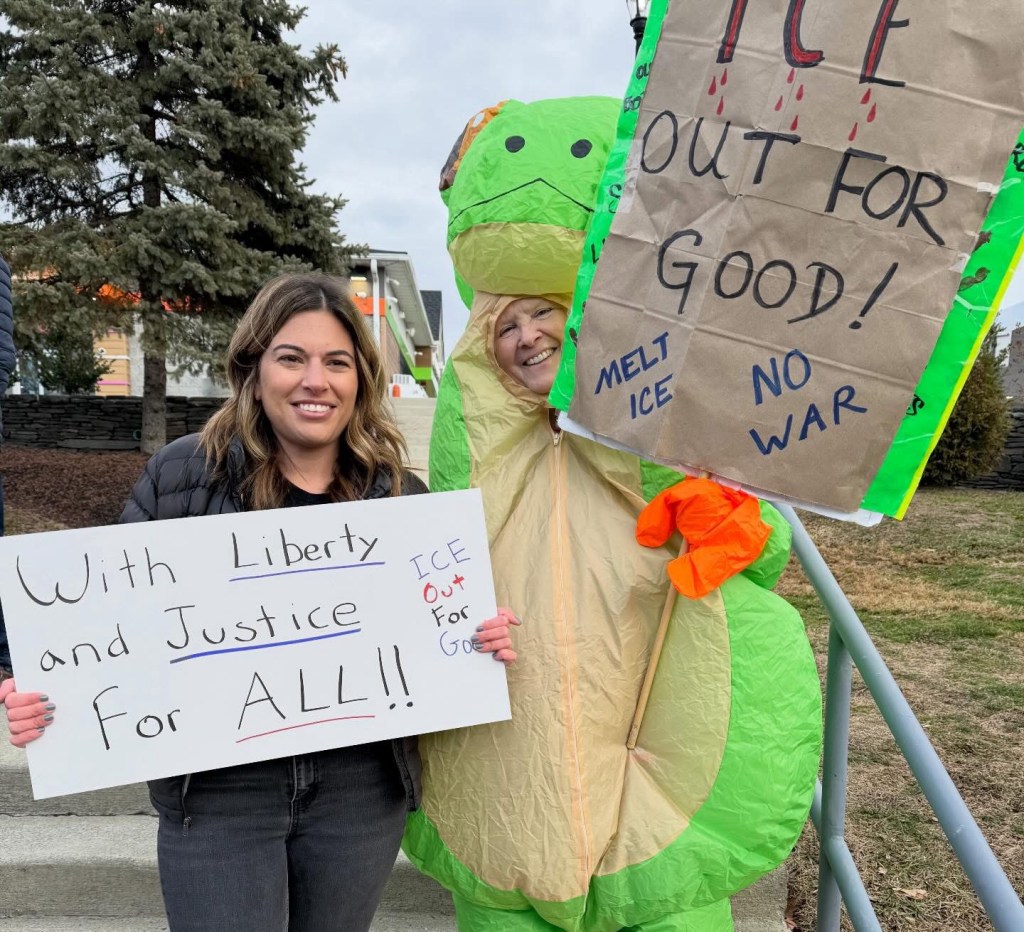
The phrase on the sign you held, “with liberty and justice for all,” is among the most powerful words in our national life. It is aspirational, moral, and unifying. But it is also demanding. It asks more of us than good intentions and public demonstrations. It asks for balance, restraint, and fidelity to the rule of law.
That is where I believe you are wrong.
Liberty and justice are not achieved by selectively rejecting glaws we find uncomfortable. They are achieved by applying the law evenly, transparently, and humanely—especially when doing so is politically difficult.
Immigration and Customs Enforcement is not an extralegal force. It is a federal agency created by Congress, funded by Congress, and governed by statute and court oversight. Like any government institution, it can and should be scrutinized, reformed, and held accountable where it fails. But opposing lawful enforcement itself while invoking “justice” creates a contradiction that cannot be resolved by slogans.
Justice does not mean the absence of enforcement.
Liberty does not mean the absence of borders.
Compassion does not require the abandonment of law.
As an elected official, you swore an oath to uphold the law. That oath does not contain exceptions for laws that are unpopular or politically fraught. When legislators publicly align themselves with movements that portray enforcement as inherently illegitimate, they risk undermining public trust in lawful institutions without offering a credible alternative that preserves order, safety, and fairness.
There is also an uncomfortable inconsistency here. Government officials cannot simultaneously claim authority under the law while signaling resistance to its execution. Advocacy has its place—but governance requires responsibility. To blur that line is not moral clarity; it is abdication.
A serious immigration conversation requires honesty:
Honesty that a nation without enforceable laws does not remain a nation. Honesty that selective enforcement is itself an injustice. Honesty that rhetoric does not substitute for policy.
If “liberty and justice for all” is to be more than a chant, it must include:
Legal immigrants who followed the rules Citizens who expect laws to be enforced fairly Communities that depend on predictable order And those accused of violations, who deserve due process—not exemption
You may believe your stance represents moral courage. I believe moral courage also includes defending the principle that laws apply evenly, even when that position draws criticism.
This disagreement is not rooted in cruelty.
It is rooted in constitutional fidelity.
And that distinction matters—especially from those entrusted with public power.
Respectfully,
Ed Kowalski
 The Valley Viewpoint