A Valley Viewpoint Narrative
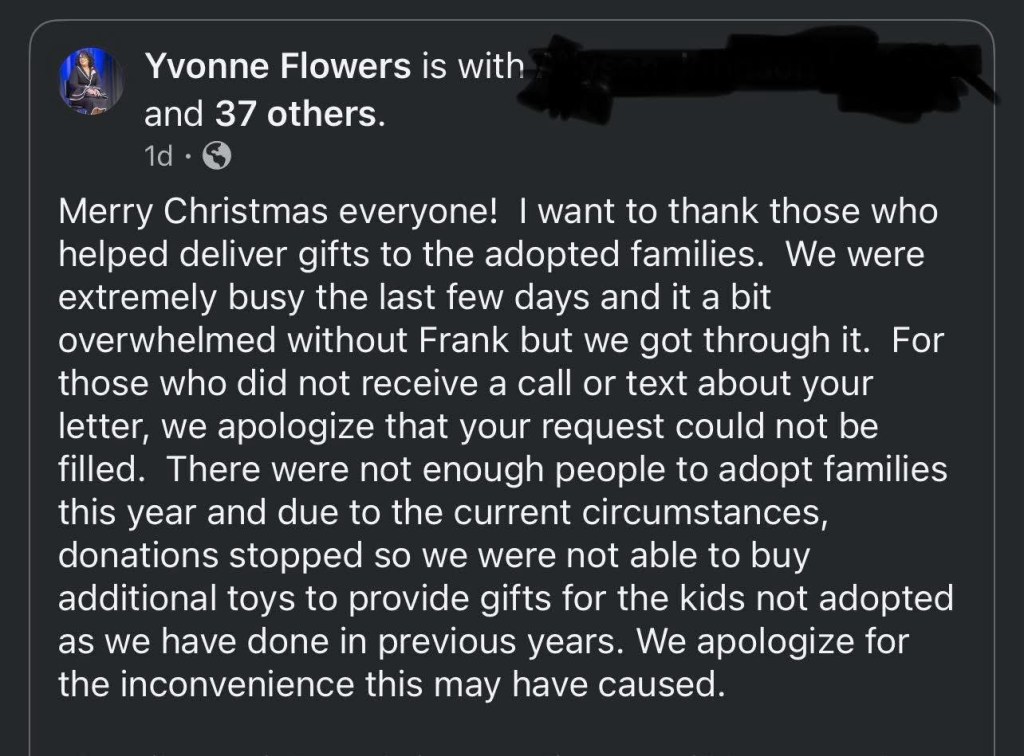
There’s a line in Mayor Yvonne Flowers’ Christmas message, posted below, that keeps echoing long after the decorations come down. Not the thanks to volunteers—that part matters and should be said. It’s the explanation that followed. The acknowledgment that things were “a bit overwhelmed without Frank.”
That stopped me.
Because when we’re talking about children—kids whose names were written on letters, kids who waited for gifts that never came—leadership cannot hinge on the presence or absence of one person. Especially not someone who holds no official role. And especially not someone whose recent, very public legal troubles underscore precisely why public-facing charitable programs must be built to function beyond personal reliance.
This isn’t about piling on. It’s about understanding how fragile systems fail.
When a program collapses because one individual isn’t available, the problem isn’t bad luck or unfortunate timing. It’s structure. It’s planning. It’s governance. Holiday charity isn’t a family operation—it’s a public trust. And public trust requires continuity, safeguards, and accountability.
Referencing a brother’s absence—under any circumstances—raises a deeper concern: who was responsible for making sure there was a backup plan? Who ensured donations didn’t simply “stop”? Who made sure no child was left behind because the system depended too heavily on informal help rather than institutional readiness?
Children don’t experience “context.” They experience outcomes.
They don’t know about staffing gaps, personal challenges, or legal distractions. They just know whether Santa came—or didn’t.
The volunteers showed up. The community tried. But leadership is measured not by effort alone—it’s measured by results, especially when the stakes are this human.
In the Valley, we understand something simple: explanations may comfort adults, but accountability protects children. And that’s the standard we should never lower—especially at Christmas.
 The Valley Viewpoint